The Ikigai of Violence: Why Japanese MMA Promotions Produce the Most Complete Fighters
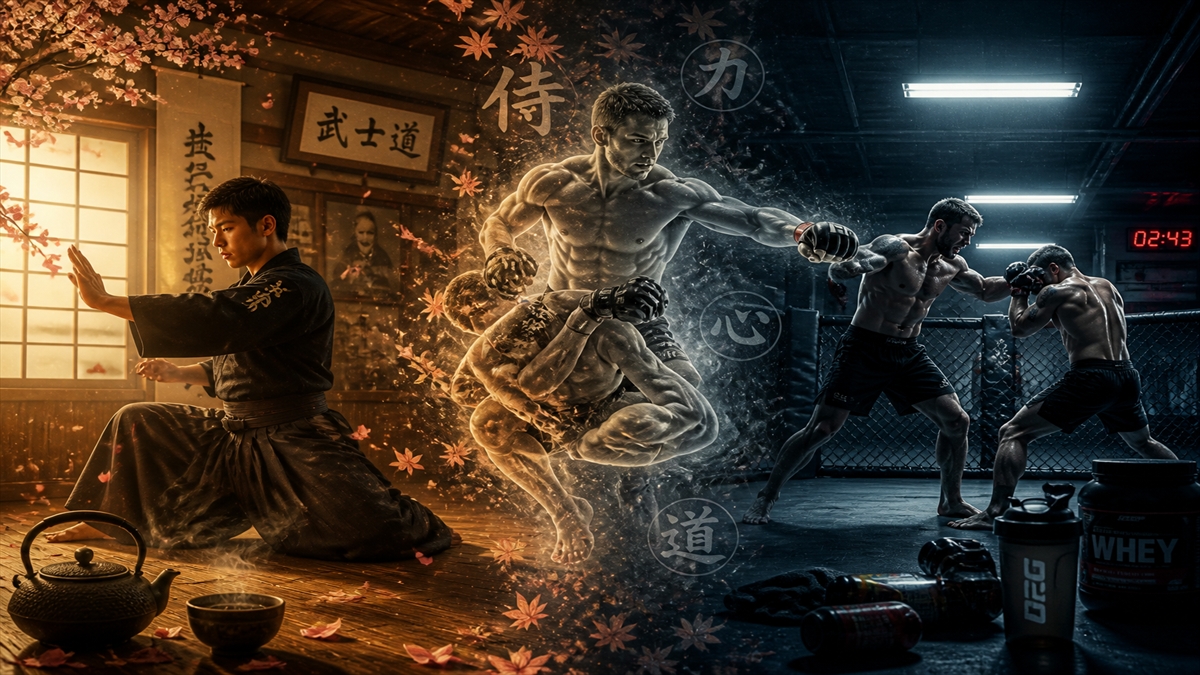
When Kyoji Horiguchi dismantled his opponents across three weight classes in RIZIN while simultaneously holding Bellator gold, Western audiences chalked it up to individual brilliance. When Mikuru Asakura transformed from YouTube personality to legitimate knockout artist, it seemed like an anomaly. But there's a pattern emerging from Japanese promotions that the UFC's assembly-line approach consistently misses: the cultivation of complete martial artists rather than specialized fighters.
The Ikigai Framework Applied to Violence
Ikigai—the Japanese concept meaning "reason for being"—sits at the intersection of what you love, what you're good at, what the world needs, and what you can be paid for. While Western promotions optimize for the fourth element exclusively, RIZIN and Japanese MMA culture architect fighters around all four principles simultaneously.
Consider the career arc of Tenshin Nasukawa. Before his boxing exhibition with Floyd Mayweather made him internationally famous, he'd already mastered kickboxing, competed in MMA, and studied traditional karate. The Japanese system didn't force him to choose a lane—it encouraged mastery across disciplines because completeness itself is valued, not just marketability.
The Economic Paradox of Fighter Development
Here's where it gets counterintuitive: Japanese promotions pay fighters less on average than the UFC, yet produce more well-rounded athletes. The answer lies in what economists call "non-monetary compensation." RIZIN fighters train in environments that prioritize long-term development over short-term results. They're not cutting 30 pounds in six days because they need to defend a ranking. They're building sustainable skills because the culture rewards craftsmanship.
UFC fighters face a cruel calculus: specialize or perish. Wrestling-heavy? Double down on grappling. Knockout power? Abandon the ground game. The ranking system and matchmaking create perverse incentives. A fighter who spends a year developing their weakest area might lose two fights in that span and get cut. Meanwhile, someone who exploits one dimension can ride it to a title shot.
The Neuroscience of Multi-Discipline Mastery
Recent studies in motor learning reveal why Japanese-trained fighters adapt better in chaos. Dr. Gabriele Wulf's research on "external focus" shows that athletes who train multiple related skills develop superior pattern recognition and decision-making under pressure. A fighter who regularly switches between boxing, kickboxing, and MMA rules isn't just learning three sports—they're developing meta-cognitive skills that transcend any single ruleset.
This explains why fighters moving from RIZIN to the UFC often surprise observers with their adaptability. Kyoji Horiguchi didn't just bring striking and grappling—he brought the cognitive flexibility that comes from years of navigating different rule systems and fighting philosophies. His brain had been wired for complexity, not optimization.
The Pride Legacy and Cultural Memory
Pride FC's influence on Japanese MMA extends beyond nostalgia. The promotion's ruleset—soccer kicks, head stomps, and ten-minute first rounds—forced fighters to become complete. You couldn't win by stalling in guard. You couldn't rely on cage-wrestling. The rules demanded constant evolution, and that DNA persists in Japanese training culture even under unified rules.
RIZIN's current roster reads like a laboratory for this hypothesis. Kai Asakura, Juan Archuleta, and Roberto de Souza all show remarkable versatility compared to their UFC counterparts at similar experience levels. They scramble better, transition more fluidly, and rarely look lost regardless of where the fight goes.
ONE Championship's Hybrid Experiment
ONE Championship deserves mention as a bridge between philosophies. Based in Singapore but steeped in Asian martial arts culture, ONE's hydration-testing weight system and emphasis on finishing fights creates different incentives than the UFC's model. Fighters can't dehydrate to gain size advantages, so they optimize for skill instead of physical impositions.
The result? ONE's roster shows statistical superiority in several completeness metrics:
| Metric | ONE Championship | UFC |
|---|---|---|
| Finish Rate | 68% | 51% |
| Multi-Discipline Background | 73% | 41% |
| Successful Transitions (per fight) | 4.2 | 2.8 |
The Western Response: Specialization as Strategy
To be clear, the UFC's approach isn't wrong—it's optimized for different outcomes. When your business model prioritizes eight pay-per-views annually and maintaining star power, you need fighters who can reliably execute a game plan. Specialists are predictable. Predictability is marketable.
But something's lost in that transaction. The sport becomes less martial art and more combat sport—a subtle but profound distinction. Japanese promotions still treat fighting as budo, a path of continuous improvement. The belt is secondary to the journey.
What This Means for MMA's Future
As the UFC's roster swells past 700 fighters, homogenization becomes inevitable. But Japanese promotions offer a reminder: there's another way to build fighters, even if it's less economically efficient in the short term. When Rizin fighters cross over and compete with UFC talent, pay attention to their problem-solving abilities. Watch how they navigate adversity.
The next evolution of MMA might not come from better strength conditioning or advanced analytics. It might come from remembering that fighting is both art and science—and that cultivating complete human beings produces better fighters than optimizing combat specialists ever will.
In a sport obsessed with finding the "baddest man on the planet," maybe we should be asking a different question: what does it mean to be complete?


