The Billion-Dollar Blind Spot: Why MMA Promotions Are Ignoring the NFL's Greatest Innovation
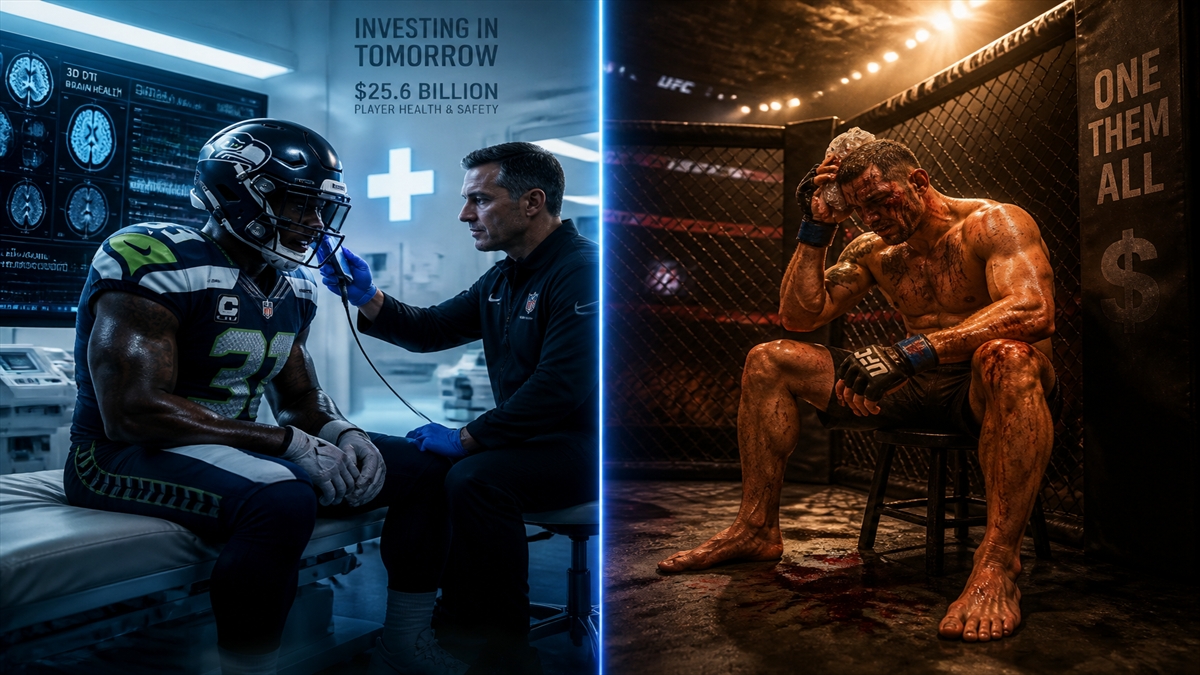
The Tale of Two Combat Sports
In 2016, the NFL settled a class-action lawsuit for $1 billion. The money went to former players suffering from chronic traumatic encephalopathy (CTE) and other brain injuries. That same year, the UFC sold for $4 billion to WME-IMG, and fighter healthcare remained virtually unchanged. Today, seven years later, the contrast between how America's most popular sport handles brain trauma versus how combat sports address it reveals a stunning paradox: the sports where getting hit in the head is incidental have better safety protocols than those where it's the entire point.
This isn't just a medical story. It's an economic one, a cultural one, and ultimately, it might determine whether MMA can survive its own success.
What the NFL Learned (and MMA Hasn't)
The NFL's investment in concussion research wasn't altruism—it was survival. Between 2002 and 2015, the league faced an existential threat: parents were pulling their kids from youth football in droves. Participation dropped 20% in some states. The solution? Massive investment in independent research, stricter protocols, and most importantly, transparent data collection.
Here's what changed:
- Independent neurologists on sidelines with unilateral authority to remove players
- Mandatory concussion baseline testing for all athletes
- Public reporting of injury data
- Investment in helmet technology and rule changes targeting dangerous hits
- Post-career neurological monitoring programs
Now compare this to MMA. The UFC, Bellator, PFL, ONE Championship, and other major promotions operate under a patchwork of state athletic commission regulations. There's no unified concussion protocol. Fighters often compete weeks after knockouts. Long-term neurological studies? Virtually non-existent at the organizational level.
The Business Case for Ignorance
Here's where it gets uncomfortable. The NFL had to change because it was losing its future workforce—children. MMA doesn't have this problem yet. The sport's fan base skews younger and continues growing globally. Fighter turnover is built into the model: prospects are cheap, champions are replaceable, and there's always another hungry kid from Dagestan or Brazil willing to fight for $12,000 and a Venum coupon.
This creates perverse incentives. Why invest millions in long-term brain health research when:
- Your fighters are independent contractors, not employees
- Medical settlements come from individual promotions, not a collective fund
- Career spans are measured in years, not decades
- The talent pipeline shows no signs of drying up
But this short-term thinking mirrors another industry's mistake: boxing in the 1950s and 60s.
Boxing's Cautionary Tale
Boxing was once America's premier sport. Then came deaths in the ring, scandals, and mounting evidence of "punch drunk" syndrome (now recognized as CTE). The sport didn't adapt. It fragmented. By the 1980s, boxing had ceded cultural dominance to other sports that seemed safer, more regulated, and more trustworthy.
The parallel should terrify MMA executives. Combat sports exist in a perpetual PR crisis, one viral video away from Congressional hearings or insurance companies refusing coverage. Unlike boxing's slow decline, modern cancel culture and social media could accelerate a reckoning.
The Ticking Clock
Consider these data points:
| Metric | NFL (2023) | Major MMA Promotions (2023) |
|---|---|---|
| Annual research investment | $200+ million | Undisclosed (estimated <$5M across all) |
| Mandatory baseline cognitive testing | Yes, all players | No unified standard |
| Post-career health monitoring | Comprehensive program | Limited to individual lawsuits |
| Independent medical oversight | League-wide protocols | Varies by commission |
The Innovation MMA Actually Needs
Here's the twist: MMA could leapfrog the NFL's two-decade learning curve. The technology exists. Wearable sensors can now detect subconcussive impacts in real-time. AI can analyze fight footage to identify dangerous patterns. Blood biomarkers can indicate brain trauma before symptoms appear.
Imagine a future where:
- Every fighter wears impact sensors during training and competition
- An independent medical AI flags concerning accumulation of strikes
- Mandatory six-month suspensions after knockouts, enforced globally across all promotions
- Blockchain-verified medical histories that follow fighters between organizations
- Post-career neurological care funded by a collective industry pool
The cost? Probably $100-200 million annually across all major promotions combined. The UFC alone generates roughly $1 billion in annual revenue. This is affordable.
Why This Matters Beyond the Cage
The broader implication extends into how we value human capital in high-risk professions. Coal miners, firefighters, and military personnel face similar challenges: industries profiting from dangerous work while externalizing long-term health costs onto workers and society.
MMA's reckoning with brain trauma isn't just about fighter safety—it's a test case for whether modern corporations can self-regulate before catastrophe forces intervention. The NFL chose reactive reform after billions in damages. MMA has the chance to choose proactive innovation.
The Crossroads
Every major sport faces a defining moment where it must choose between short-term profits and long-term survival. Baseball had its steroid era. Cycling had Lance Armstrong. The NFL had concussions.
MMA's moment is now. The fighters who built the sport—Chuck Liddell, Wanderlei Silva, countless others—are aging into their 50s and 60s. In a decade, we'll have undeniable data on what decades of head trauma does to these athletes. The only question is whether promotions act now or wait for that data to become a billion-dollar lawsuit and a Congressional hearing.
The NFL's example proves the path forward exists. Whether MMA has the wisdom to follow it will determine if we're watching the sport's golden age or its peak before a long decline. The irony would be almost poetic: combat sports knocked out not by a punch, but by their own negligence.


