BKB's Mexico Play and Chimaev's Exit Threat: Why Combat Sports' Power Structure Is Fracturing
The Feeder League Myth Is Dead
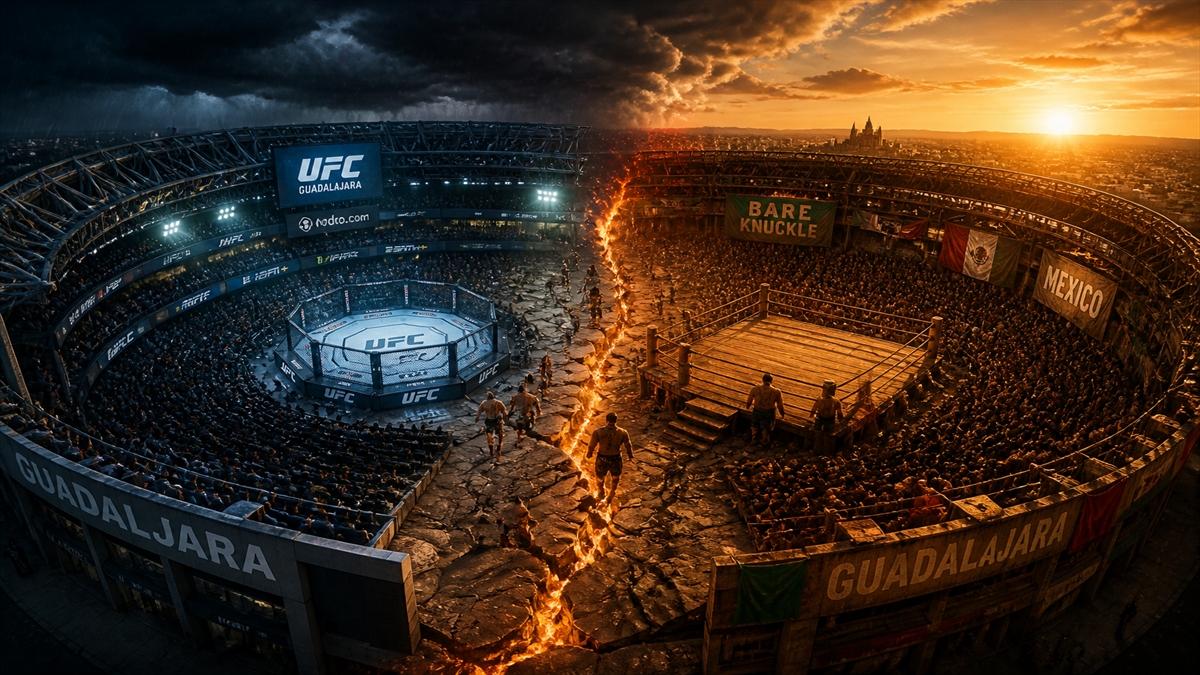
For decades, combat sports operated on a clean pyramid: regional shows fed prospects to Bellator or ONE, which eventually graduated elite talent to the UFC. Everyone knew their place. Fighters climbed, promotions accepted their role as developmental systems, and the apex predator in Las Vegas collected the finished product. That gentlemen's agreement is disintegrating in real time, and two seemingly unrelated stories from early 2025 illustrate why the old model is toast.
Bare Knuckle Fighting Championship announced BKB 59 in Mexico—not a one-off novelty show, but the anchor event for systematic Latin American expansion. Meanwhile, Khamzat Chimaev, one of the UFC's most bankable stars, publicly floated retirement or departure unless the promotion meets specific demands. Strip away the surface details and you're looking at the same phenomenon: the economics of combat sports are rewiring, and the UFC's gravitational pull is weakening in ways that seemed impossible five years ago.
Why Bare-Knuckle Boxing Sees Gold in Guadalajara
BKB's Mexico move isn't about charity or cultural exchange. It's cold arithmetic. Operational costs for bare-knuckle events run 40-60% lower than traditional boxing or MMA—no expensive glove contracts, simpler medical protocols in jurisdictions with lighter regulation, and dramatically shorter fight camps because most bouts don't require the same technical preparation as gloved competition. You're selling spectacle over skill, violence over strategy, and that translates directly into ticket sales in markets where fans haven't been oversaturated by decades of UFC programming.
Mexico represents the perfect storm: a massive population with deep combat sports literacy, regulatory frameworks that haven't calcified around existing promotions, and media distribution channels hungry for live content that isn't soccer. BKB doesn't need to compete with the UFC's production values or roster depth. They're offering a fundamentally different product—shorter, bloodier, cheaper to produce, and easier to monetize in emerging markets where PPV infrastructure is still developing but live gate revenue remains strong.
The genius is geographical monopoly. While the UFC spreads resources across global markets, BKB can concentrate on becoming the dominant combat sports brand in specific regions. Own Mexico City's live event scene, lock down broadcast deals with Televisa or TV Azteca, and suddenly you're not a minor league—you're the major league in a market of 130 million people. The business model mirrors what ONE Championship executed in Southeast Asia: concede the U.S. market, dominate everywhere else.
Chimaev's Ultimatum and the Leverage Revolution
Khamzat Chimaev threatening to walk away from the UFC would've been career suicide in 2015. In 2025, it's a calculated negotiating position backed by genuine alternatives. PFL offers equity stakes and transparency around fighter compensation. Saudi Arabia's emerging promotions wave blank checks at marquee names. Bare-knuckle, while a step down in prestige, pays headliners 200-300k for significantly less training wear and tear than a five-round UFC main event.
The structural issue is that UFC contracts lock fighters into multi-fight deals with champion clauses that extend agreements indefinitely, while the promotion maintains exclusive matching rights that functionally block free agency. For years, fighters accepted this because there was nowhere else to go. Now? A welterweight contender can credibly threaten to take his 4 million Instagram followers to a Saudi-backed organization that'll pay double his UFC purse for half the fights. The UFC's leverage depended on monopoly power, and monopolies collapse once credible competition emerges.
Chimaev's specific demands—reportedly better pay structure and guaranteed title shots—matter less than the fact he's making demands publicly and facing minimal blowback from fans. The old Dana White playbook of "if you don't want to fight here, go somewhere else" stops working when fighters actually have somewhere else to go. And when those somewhere elses include cryptocurrency sponsorship deals that dwarf traditional endorsement contracts, the UFC's total compensation package starts looking less competitive despite higher base purses.
The Cross-Promotional Arms Race Nobody Saw Coming
Look at the fighter movement patterns from 2024 into early 2025. Francis Ngannou left the UFC for boxing and PFL. Demetrious Johnson retired from ONE after a stint outside the UFC. Multiple Bellator veterans signed with PFL post-merger. Bare-knuckle events now regularly feature former UFC roster fighters not as washed-up nostalgia acts, but as legitimate headliners in their athletic prime.
What changed? Three things converged. First, international broadcast deals fragmented—you no longer need U.S. cable distribution to reach massive audiences when DAZN, ESPN+, and regional streaming services compete for content. Second, sports betting legalization created entirely new revenue streams that favor live events over tape-delayed broadcasts, giving regional promotions with local market dominance an advantage. Third, social media decoupled fan loyalty from promotional affiliation. Fans follow fighters, not brands, which means a star can take his audience with him when he jumps ship.
BKB's Mexico expansion exemplifies this convergence. They're not trying to out-produce the UFC—they're building a parallel ecosystem where different economics apply. Lower costs, regional focus, and a product differentiated enough that it's not direct competition. It's the combat sports equivalent of how the XFL finally succeeded by positioning as spring football rather than NFL-killer.
Why This Matters Beyond Individual Beefs
The Chimaev situation and BKB's territorial expansion aren't random data points. They're symptoms of structural realignment. For context, think about how the NBA and European basketball leagues coexist—the NBA remains the pinnacle, but EuroLeague teams can credibly recruit NBA players with tax advantages, shorter seasons, and guaranteed contracts. Combat sports is approaching a similar equilibrium.
The UFC will remain the most prestigious organization, but "most prestigious" no longer automatically means "only viable option." A fighter can now construct a career path that includes a UFC run for credibility-building, a move to PFL for equity upside, bare-knuckle appearances for quick cash, and boxing exhibitions for legacy fights. Promotional loyalty becomes one variable among many rather than the organizing principle of an entire career.
The Undercard Nobody's Watching: Regulatory Arbitrage
Here's the angle most coverage misses: BKB's international expansion works because different jurisdictions have wildly different regulatory frameworks. Mexico's athletic commissions operate under completely different constraints than Nevada's. That's not a bug—it's the entire business model. Bare-knuckle events can happen in markets where the UFC faces bureaucratic headwinds or existing contractual obligations with local promoters.
The UFC spent two decades building relationships with state athletic commissions, creating standardized rules, and establishing medical protocols that became industry standard. That infrastructure is now a liability when nimbler competitors can enter markets with fewer regulatory hoops. It's the same dynamic that let Uber undercut taxis—incumbents get weighed down by the very structures that initially gave them legitimacy.
What Happens When Fighters Stop Bluffing
The critical question isn't whether Chimaev actually leaves or BKB succeeds in Mexico. It's whether fighters collectively realize they have leverage and start using it systematically. One star threatening to walk is noise. Ten stars coordinating departure timelines is a labor movement, and combat sports has never successfully dealt with organized fighter power.
The UFC's response so far has been predictable: ignore the noise, maintain contractual hard lines, and rely on the next generation of hungry prospects to replace malcontents. That worked when prospects had no alternative path to stardom. It breaks down when a 23-year-old knockout artist can build a following on Instagram, sign with a Saudi-backed promotion for guaranteed money, and never need UFC credibility to become financially successful.
We're not there yet, but the trajectory is clear. BKB's Mexico play and Chimaev's ultimatum are early tremors, not the earthquake. The real shift comes when fighters stop viewing promotional changes as career risks and start treating them as standard negotiating tactics—the way NBA players approach free agency or soccer players navigate transfer windows.
The New Normal: Fragmentation as Feature, Not Bug
Combat sports is moving toward a future that looks less like boxing's alphabet-soup dysfunction and more like soccer's club system—multiple credible organizations with regional dominance, fighters moving between them based on compensation and opportunity, and fans following individual athletes rather than pledging loyalty to promotional brands. BKB won't dethrone the UFC. They don't need to. They just need to carve out sustainable market share in territories where they can operate more efficiently than the global incumbent.
For fighters, this fragmentation represents the first real leverage they've had in decades. The threat to leave isn't empty when you've got three legitimate offers on the table. For promotions, it means competing on terms beyond just "we're the UFC." And for fans, it probably means more interesting fights happening outside the traditional power structure, which isn't the worst outcome.
The pyramid is crumbling. What replaces it might actually be better for everyone except the organization that spent twenty years sitting at the top.


