The Billionaire's Gambit: How Saudi Arabia's Boxing Takeover Mirrors the Premier League Revolution
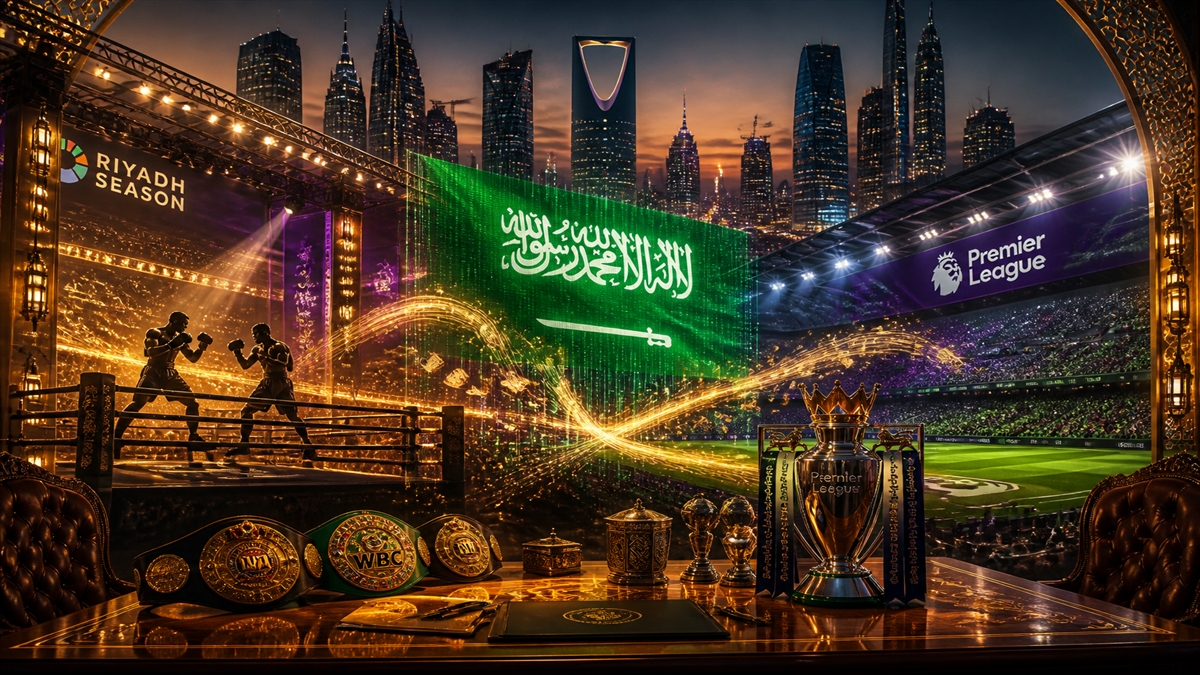
When Turki Alalshikh tweets a fight poster at 3 AM Riyadh time, the boxing world scrambles. The architect of Saudi Arabia's Public Investment Fund sports division has orchestrated more marquee heavyweight fights in 18 months than promoters managed in the previous decade. But if you think this is just about boxing, you're missing the bigger picture—this is the Premier League playbook, translated to the sweet science.
The Manchester City Blueprint
In 2008, Sheikh Mansour bought Manchester City for £210 million. Pundits scoffed. Fifteen years later, City is worth $4.99 billion and has reshaped English football's power structure. The Saudi boxing invasion follows an eerily similar trajectory: identify a fragmented market, inject unlimited capital, poach established talent, and accelerate toward legitimacy through sheer financial gravity.
Consider the numbers. Saudi Arabia's General Entertainment Authority has deployed an estimated $1.2 billion across boxing events since 2019. That's not sponsorship money—that's venue fees, fighter purses, and production costs for fights that would never happen under traditional promotion economics. Tyson Fury's $50 million guarantee for facing Francis Ngannou wasn't just generous; it was strategically excessive, designed to reset market expectations the way City's spending forced other Premier League clubs to either match or become irrelevant.
The Fragmentation Advantage
Boxing's alphabet soup of sanctioning bodies—WBC, WBA, IBF, WBO—creates precisely the kind of organizational weakness that Saudi capital exploits. Unlike the UFC's monolithic control or even soccer's FIFA governance, boxing has no central authority capable of resisting a well-funded outside force. It's the sport's greatest vulnerability and, paradoxically, what makes it attractive to Saudi strategists.
When Alalshikh announced the heavyweight tournament featuring Fury, Usyk, Joshua, and Wilder, he wasn't asking permission from Bob Arum, Eddie Hearn, or Frank Warren. He was simply offering numbers those promoters couldn't refuse—then letting them compete for the privilege of co-promoting under his banner. This inversion of traditional power dynamics has unfolded faster in boxing than it did in football, largely because boxing never had a UEFA or FIFA to slow the process.
The Undisputed Economics
The Usyk-Fury rematch in December 2024 generated approximately $150 million in site fees alone—money Saudi Arabia paid simply to host the event. Compare that to traditional boxing economics, where promoters typically scrambled to cobble together broadcast deals, gate receipts, and sponsorships just to break even on an eight-figure fight purse. Saudi Arabia eliminates financial risk by absorbing it entirely, transforming boxing from a precarious venture capital play into a guaranteed returns business for fighters and promoters willing to participate.
This economic model destroys traditional negotiating leverage. When Anthony Joshua reportedly turned down $120 million for two Saudi fights in 2023, it barely registered—they simply moved to the next name on the list. This is how sports empires are built: make yourself the only venue where fighters can earn generational wealth in a single night, and geography becomes destiny.
The Soft Power Endgame
Saudi Arabia's Vision 2030 economic diversification plan explicitly names sports and entertainment as pillar investments. Critics call it sportswashing—using athletics to rehabilitate international reputation. But that framing misses the sophistication of the strategy. The Premier League didn't just change perceptions of Abu Dhabi; it created genuine economic value through brand appreciation, tourism, and global media reach.
Boxing serves a similar but accelerated function. Unlike football's nine-month seasons requiring sustained attention, boxing delivers concentrated global audiences for 36 minutes of action. The Fury-Usyk fight reached an estimated 500 million viewers worldwide—comparable to a Champions League final but requiring a fraction of the infrastructural commitment. It's efficient soft power, and the heavyweight division's inherent drama makes it perfect for the strategy.
The Succession Problem
Here's where the Premier League parallel breaks down. Manchester City built institutional knowledge—scouting networks, youth academies, analytics departments that will outlast any individual ownership. Saudi boxing, by contrast, remains heavily dependent on Alalshikh's personal relationships and social media engagement. When he tweets "make this fight," it happens. But this model doesn't scale beyond one very connected individual's attention span.
The question isn't whether Saudi Arabia can continue hosting mega-fights—of course they can, indefinitely. The question is whether they're building a sustainable boxing ecosystem or simply renting the sport's biggest names for spectacular one-offs. Football's lesson: institutional depth matters more than individual transactions.
The Fighter's Dilemma
For boxers, the calculus is brutally simple. Fight in Riyadh and potentially earn more in one night than the previous five years combined, or hold out for "traditional" opportunities that increasingly don't exist at the same financial level. Terence Crawford, Canelo Álvarez, and other pound-for-pound talents are watching heavyweight developments closely because they understand the market is bifurcating: there will be Saudi-level money, and there will be everything else.
This creates a fascinating game theory situation. Early adopters who embraced Saudi cards gained financial windfalls and career momentum. Holdouts risk becoming irrelevant not through skill degradation but through market evolution—like musicians who refused to put their catalogs on Spotify and watched their cultural footprint shrink accordingly.
The Five-Year Horizon
If the Premier League parallel holds, we're approximately three years into a 15-year transformation. Saudi Arabia has established Riyadh as a legitimate boxing destination and demonstrated financial commitment. The next phase involves creating events that feel organic rather than manufactured—building rivalries, developing homegrown talent, and establishing traditions that transcend any single fight or fighter.
The heavyweight division will either emerge stronger from this experiment—unified, financially healthy, and producing legacy-defining fights—or it will become a gilded exhibition circuit where the biggest names perform for guaranteed money without the career stakes that make boxing culturally relevant. Which outcome materializes depends largely on whether Saudi strategists learned the right lessons from their football investments: money creates opportunity, but only authentic competition creates legends.
Either way, the old boxing economics aren't coming back. Turki Alalshikh isn't just spending money—he's rewriting the sport's financial architecture the same way Sheikh Mansour did with football. And just like Premier League fans eventually stopped asking if Abu Dhabi money was "good" for the game and started arguing about tactics and titles, boxing fans will eventually accept that the heavyweight throne now sits 3,000 miles east of Las Vegas. The only question is what comes next.


