The Rico Verhoeven Statement: Why Kickboxing's GOAT Lost More Than a Fight to Usyk
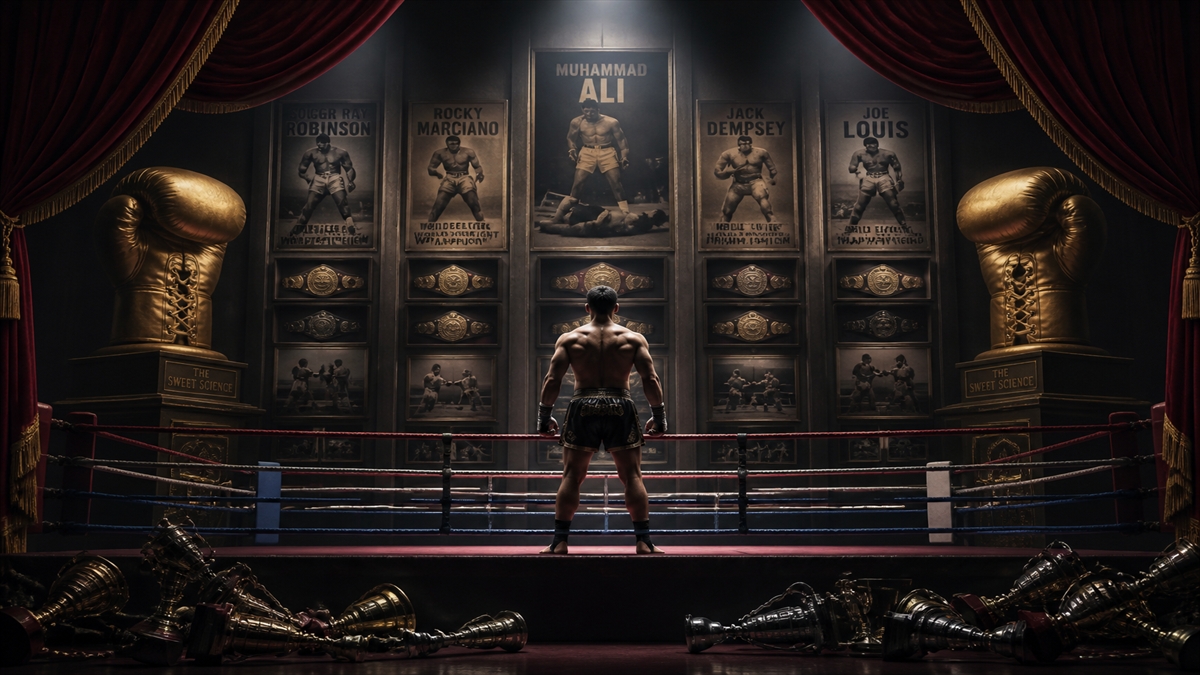
Rico Verhoeven's post-fight statement following his eighth-round knockout loss to Oleksandr Usyk was everything you'd expect from a champion: gracious, measured, and reflective. "Oleksandr showed why he is one of the best," Verhoeven wrote, congratulating the Ukrainian heavyweight on his boxing mastery. What he didn't say—what he couldn't say—was more revealing than any words: kickboxing's greatest champion had just been positioned as a supporting character in someone else's comeback story.
This wasn't just a loss. It was a public execution of kickboxing's legitimacy in the court of mainstream combat sports opinion.
The Narrative Machine Devours Its Tribute
Verhoeven entered this fight with credentials that would make most combat sports champions envious: a five-time GLORY Heavyweight Champion, the longest-reigning titleholder in the promotion's history, with dominant victories over every relevant heavyweight kickboxer of his generation. In K-1 terms—the Mount Rushmore metric of kickboxing—he's a legitimate all-timer. Yet the pre-fight framing positioned him not as a credible threat but as a "tough test" for Usyk's ring rust.
The promotional machinery surrounding this event revealed boxing's genius at narrative construction. Usyk, returning from a year-long layoff and stepping outside his comfort zone into a hybrid ruleset, somehow remained the prohibitive favorite. Verhoeven, despite competing in a format closer to his expertise than pure boxing, was cast as the sacrificial lamb proving Usyk's versatility. When the knockout came, it confirmed what the narrative had pre-determined: boxing supremacy, kickboxing inferiority.
This dynamic mirrors something from evolutionary biology called "competitive exclusion principle"—when two species compete for the same resources in the same niche, one inevitably drives the other to extinction or marginalization. Boxing and kickboxing compete for the same audience attention, the same sponsorship dollars, the same ESPN timeslots. Boxing, with its century-long head start and economic moat, is systematically excluding kickboxing from the mainstream conversation.
The Financial Abyss Between Sports
Let's discuss the elephant in the room: money. Verhoeven's reported purse for arguably the biggest fight of his career was dwarfed by what mid-level boxers earn for far less significant contests. The economic disparity isn't just significant—it's existential.
Consider these numbers: GLORY's entire annual revenue likely doesn't exceed what a single Canelo Álvarez fight generates. The highest-paid kickboxers might earn low six figures for championship fights; journeyman boxers on major undercards clear similar amounts. For a sport's "GOAT," Verhoeven's earning potential sits somewhere between a prospect on a Top Rank card and a regional boxing champion.
This creates a perverse incentive structure. The biggest financial opportunity available to kickboxing's best fighters is to become content for boxing's promotional machine—to lose spectacularly in crossover events that "prove" boxing's superiority while offering a one-time payday that exceeds years of kickboxing purses combined.
The One-Way Street of Crossover Economics
Notice something about crossover fights? They flow in only one direction. Boxers don't test themselves under kickboxing rules against elite kickboxers. Why would they? The financial incentive flows entirely toward bringing kickboxers into boxing's realm, under boxing's rules (or boxing-adjacent hybrid formats), where boxing's narrative control remains absolute.
When James Toney fought Randy Couture in MMA, he was submitted in the first round—but that fight happened because the UFC paid him substantially and because MMA in 2010 had achieved enough mainstream legitimacy to absorb a boxing legend without existential risk. Kickboxing lacks both the financial resources to attract boxers and the cultural cachet to survive the narrative when its champions inevitably lose in boxing-centric formats.
Verhoeven's Grace: Dignity or Resignation?
Verhoeven's respectful response to defeat demonstrates either the grace of a true martial artist or the pragmatic acceptance of a fighter who understands the game's economics. Perhaps both. His statement thanked fans, congratulated Usyk, and promised future challenges. What it didn't include was any questioning of the format, the framing, or the fundamental fairness of positioning kickboxing's greatest champion as a tune-up fight.
This is where the comparison to other sports becomes illuminating. Imagine if basketball's best player lost a game of H-O-R-S-E to a baseball player, and the sporting world concluded that basketball was therefore inferior to baseball. Absurd, right? Yet this is precisely the logical fallacy that crossover combat sports events perpetuate, and fighters like Verhoeven cannot publicly challenge it without appearing to make excuses.
The grace required of defeated fighters—especially those from "lesser" sports in the hierarchy—creates a rhetorical trap. To question the framing is to appear bitter. To accept it graciously is to validate the narrative of your sport's inferiority. Verhoeven chose dignity, but that choice comes at the cost of allowing kickboxing's legitimacy to erode further.
The Legitimacy Crisis Deepens
Kickboxing faces a compound problem. It cannot attract mainstream attention without crossover events involving boxing stars. But those events, by their nature and format, almost inevitably result in kickboxers losing—thus reinforcing the mainstream perception that kickboxing is boxing's inferior cousin rather than a distinct combat sport with different technical demands.
This creates a death spiral for talent retention. Why would a promising young Dutch kickboxer remain in GLORY or ONE Championship when the path to real money requires transitioning to boxing anyway? Why perfect the art of low kicks, clinch work, and eight-limb striking when the financial endgame is slipping on 10-ounce gloves and competing under Queensberry rules?
The brain drain is already occurring. Tenshin Nasukawa, arguably the most talented kickboxer of his generation, is pursuing boxing. Takeru Segawa is exploring options outside traditional kickboxing. Even Rico Verhoeven, after this loss, faces a calculus: return to GLORY for modest purses and diminishing relevance, or chase boxing money in increasingly one-sided spectacles.
What Boxing Learned from WWE
Boxing's promotional machine has internalized something professional wrestling understood decades ago: controlling the narrative is more valuable than competitive integrity. WWE thrived by creating storylines where outcomes served the promotion's long-term interests. Boxing does the same thing, but with the veneer of legitimate competition.
Crossover events aren't designed to answer genuine questions about martial arts effectiveness—if they were, we'd see rules designed for competitive balance rather than formats that favor one side's expertise. They're designed to generate interest through novelty while ensuring outcomes that reinforce boxing's cultural supremacy.
Verhoeven got WWE'd, but nobody can acknowledge it because the punches were real and the knockout was legitimate. That's the genius of the system.
The Path Forward (Or Lack Thereof)
What are kickboxing's options? The sport needs capital to compete with boxing's promotional budgets, but capital follows attention, and attention requires mainstream breakthrough moments. Those moments seemingly require boxing crossovers, which perpetuate the cycle of narrative defeat.
Some potential solutions exist, though none are easy:
- Pursue Asian market consolidation where kickboxing maintains stronger cultural cachet and financial backing through organizations like ONE Championship
- Develop stronger streaming-era digital strategies that bypass traditional sports media's boxing bias
- Create genuine hybrid rulesets with neutral stakeholders that allow for competitive balance in crossover events
- Accept the niche status and optimize for sustainable profitability rather than mainstream breakthrough
The last option might be the most realistic. Not every combat sport needs to compete with boxing for mainstream American attention. Kickboxing could thrive as a regional phenomenon in Europe and Asia, develop dedicated streaming audiences, and build sustainable economics without sacrificing its champions to boxing's narrative machine.
The Sacrifice of Rico Verhoeven
Rico Verhoeven's legacy remains intact within kickboxing's community. He's still the most dominant GLORY heavyweight champion in history, still the fighter who elevated the sport's profile in Europe, still one of the greatest to ever compete in the discipline.
But to the broader combat sports world—the casual fans, the mainstream media, the sponsors with real money—he'll be remembered as the kickboxing champion who got knocked out by a boxer. The nuance of different sports with different technical demands gets lost in the simplistic narrative: boxer beats kickboxer, therefore boxing superior.
That's what makes his gracious statement so poignant. Verhoeven understands he lost more than a fight. He lost leverage for his sport's legitimacy claims. And the most damning part? He probably had no real choice but to take the fight. The money was too significant. The opportunity was too rare. The economics of kickboxing offered no comparable alternative.
In the end, Rico Verhoeven didn't just lose to Oleksandr Usyk. He lost to the structural realities of combat sports economics, to promotional machinery that values narrative over competitive balance, and to a sport desperately seeking mainstream validation through the very events that undermine its legitimacy.
His gracious statement in defeat represents either acceptance of kickboxing's place in the hierarchy or a champion making the best of promotional realities beyond his control. The distinction barely matters anymore. The result is the same: kickboxing's greatest champion became boxing's content, and the sport slides further toward irrelevance in the mainstream consciousness.
That's the real knockout nobody saw coming.


