Canadian MMA Fighters Who Made the UFC Feel Local
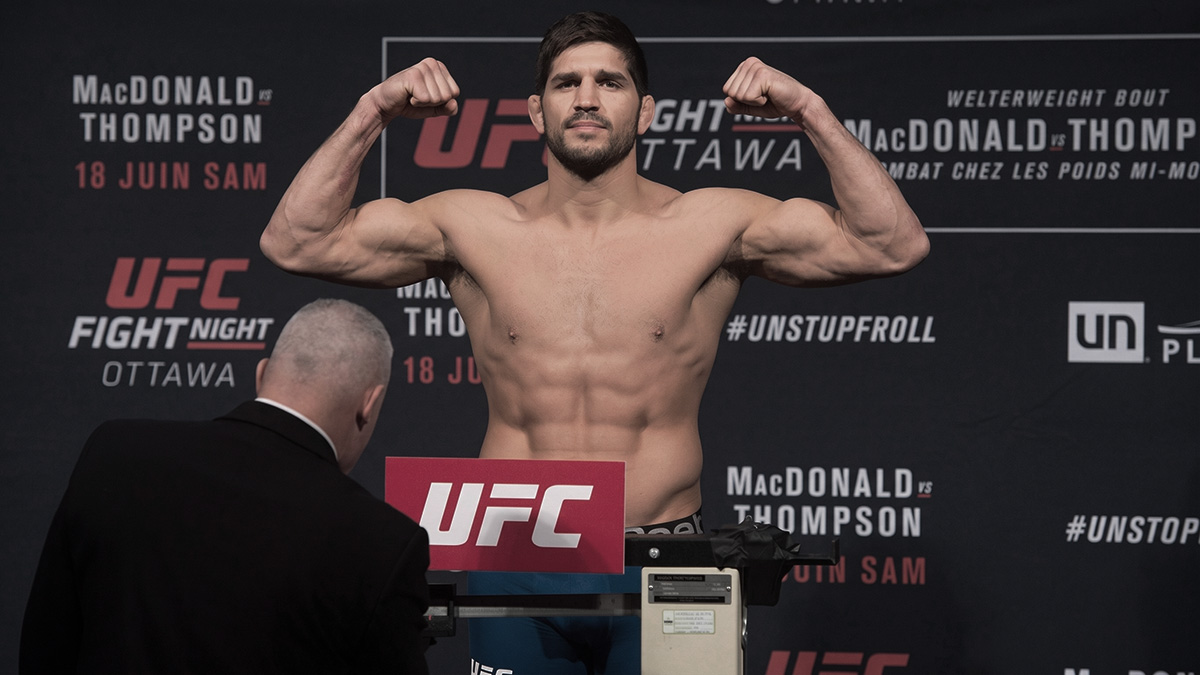
Canada’s MMA identity is often reduced to one name, Georges St-Pierre. That is understandable, but it is also incomplete. Before and around the GSP boom, several Canadian fighters helped turn the UFC from a distant American product into something fans in Quebec, Ontario, and beyond could recognize as partly their own.
Patrick Côté, Mark Hominick, Sam Stout, and David Loiseau did not share the same style, weight class, or career arc. What linked them was visibility at moments when Canadian MMA needed recognizable faces beyond the obvious superstar. Their fights gave local fans entry points: a Quebec middleweight in a title bout, an Ontario featherweight refusing to fade in Toronto, a lightweight brawler building a UFC résumé through action, and a creative striker who made French-Canadian MMA feel dangerous.
The more a sport grows, the more its ecosystem expands around it: broadcast schedules, gym cultures, stats databases, podcasts, and regulated betting resources. That same information layer now includes Canadian-facing references such as coolbet sportsbook, but the deeper story remains the fighters who made those numbers and narratives worth following.
David Loiseau: The Crow Before the Canadian Boom
David Loiseau belongs to the pre-expansion chapter of Canadian MMA. He was not walking into sold-out Canadian arenas under the UFC banner, because the promotion had not yet staged its first event in Canada. Instead, he carried Montreal’s martial arts identity into American cages when Canadian visibility was still something fighters had to earn one bout at a time.
His title challenge against Rich Franklin at UFC 58 carried a built-in national frame: the card was billed as USA vs. Canada. Loiseau lost the fight, but the matchup mattered because it placed a French-Canadian middleweight in a championship main event at a time when the UFC’s Canadian story was still forming. His spinning attacks, elbows, and nickname made him easy to remember, even when the result did not go his way.
Loiseau’s legacy is not just the belt he failed to win. It is the fact that he made Canadian MMA feel present before Canada became a regular UFC market. He was a signal that the country could produce athletes with charisma, technique, and main-event relevance.
Patrick Côté: The Durable Quebec Contender
Patrick Côté’s career had a different rhythm. He was not a mystery artist like Loiseau, and he was not built around one defining technical flourish. His identity came from durability, composure, and the willingness to stand in difficult fights without looking overwhelmed by the occasion.
That quality mattered most at UFC 90, where Côté challenged Anderson Silva for the middleweight championship. Silva was already building one of the most intimidating title reigns the sport had seen, so simply extending the fight into the third round gave Côté a strange kind of symbolic value. The bout ended after Côté injured his knee, but the image that lingered was of a Canadian contender who did not fight as if he had accepted defeat before the opening horn.
For Canadian fans, Côté helped normalize the idea that local fighters could occupy serious UFC space. Not every career needs a belt to become useful to a national scene. Sometimes the milestone is proving that a fighter from Quebec can be booked against the most feared champion in the sport and still look like he belongs there.
Mark Hominick: Ontario’s Five-Round Argument
Mark Hominick’s defining night came at UFC 129 in Toronto, against José Aldo for the featherweight title. The setting mattered almost as much as the opponent. Rogers Centre was packed for one of the biggest moments in UFC event history, and Hominick walked into that pressure as the local emotional centre of the co-main event.
The fight did not turn into a fairytale. Aldo won by unanimous decision, and for long stretches he showed why he was the champion. Yet Hominick’s late surge, his refusal to disappear under damage, and the visual drama of the final rounds turned a loss into one of the most durable Canadian MMA memories.
What made Hominick important was not only courage. He came out of the Team Tompkins environment, where sharp striking, discipline, and honest matchmaking shaped a generation of Ontario fighters. Hominick helped prove that Canadian MMA was not just about wrestling-heavy dominance from Montreal. It could also mean compact boxing, clean kickboxing habits, and five-round grit in front of a home crowd.
Sam Stout: The Action Fighter Who Built Trust
Sam Stout was never framed as a title-era icon, and that is exactly why his career matters. He represented the fighter fans could follow card after card, not because a championship was always near, but because the work was almost always watchable. His lightweight run gave Canada a different kind of UFC presence: consistent, violent, technically straightforward, and honest.
Stout’s trilogy with Spencer Fisher became the kind of rivalry that explains why fight fans remember more than belts. The first meeting at UFC 58 introduced him to a larger audience, and later chapters reinforced his reputation for pace and exchange-heavy striking. Over a 20-fight UFC stint, he became part of the promotion’s Canadian furniture, a familiar name whenever the lightweight division needed energy.
His career also carried a quiet regional importance. Stout, Hominick, and coach Shawn Tompkins formed part of an Ontario fighting culture that felt less mythologized than Montreal’s Tristar-driven rise but still deeply influential. In practical terms, Stout made Canadian MMA feel less like a once-in-a-generation phenomenon and more like a working scene with repeatable talent.
How These Careers Changed the Canadian Fan’s View
The value of these four fighters becomes clearer when they are placed side by side. None of them replaced GSP as Canada’s central MMA reference point. Instead, they widened the map.
| Fighter | Canadian connection | Defining UFC marker | Lasting meaning |
|---|---|---|---|
| David Loiseau | Montreal and French-Canadian MMA | Middleweight title challenger at UFC 58 | Made Canada visible before UFC events arrived in the country |
| Patrick Côté | Quebec contender | Middleweight title bout with Anderson Silva at UFC 90 | Showed Canadian durability against an all-time champion |
| Mark Hominick | Ontario featherweight | José Aldo title fight at UFC 129 in Toronto | Turned a loss into a home-crowd legacy moment |
| Sam Stout | Ontario lightweight | Long UFC run and Spencer Fisher rivalry | Gave Canada a reliable action-fighter identity |
Their combined impact can be reduced to a few practical shifts:
- They gave Canadian fans more than one province and one gym to identify with.
- They made losses meaningful when the performance itself carried cultural weight.
- They created recognizable fighter archetypes: the creative striker, the durable contender, the technical local hero, and the action veteran.
- They helped prepare the audience for Canada as a repeat UFC destination, not just a novelty market.
That is why biography matters in MMA. Records tell part of the truth, but careers become memorable when they change what fans expect from a country, a gym, or a division.

The modern Canadian MMA conversation has moved on to newer names, deeper regional scenes, and a more mature fan base. Still, Loiseau, Côté, Hominick, and Stout remain useful because they explain how that maturity was built. They were not identical pioneers, but they were all visible at moments when visibility mattered.
Loiseau helped establish the early ceiling. Côté tested that ceiling against one of the sport’s great champions. Hominick made Toronto feel like a real MMA capital for one night, while Stout gave Ontario fans a long-running reason to stay invested between the larger events.
Canadian MMA did not become credible because of one perfect career. It became credible because enough fighters kept showing up in different roles, with different strengths, in different cities. These four biographies are reminders that national fight culture is rarely built by one champion alone; it is built by the contenders, specialists, crowd favourites, and veterans who make the sport feel close to home.


