The Delayed Return Doctrine: Why Punahele Soriano's Car Accident Exposes the UFC's Unspoken Injury-Replacement Crisis
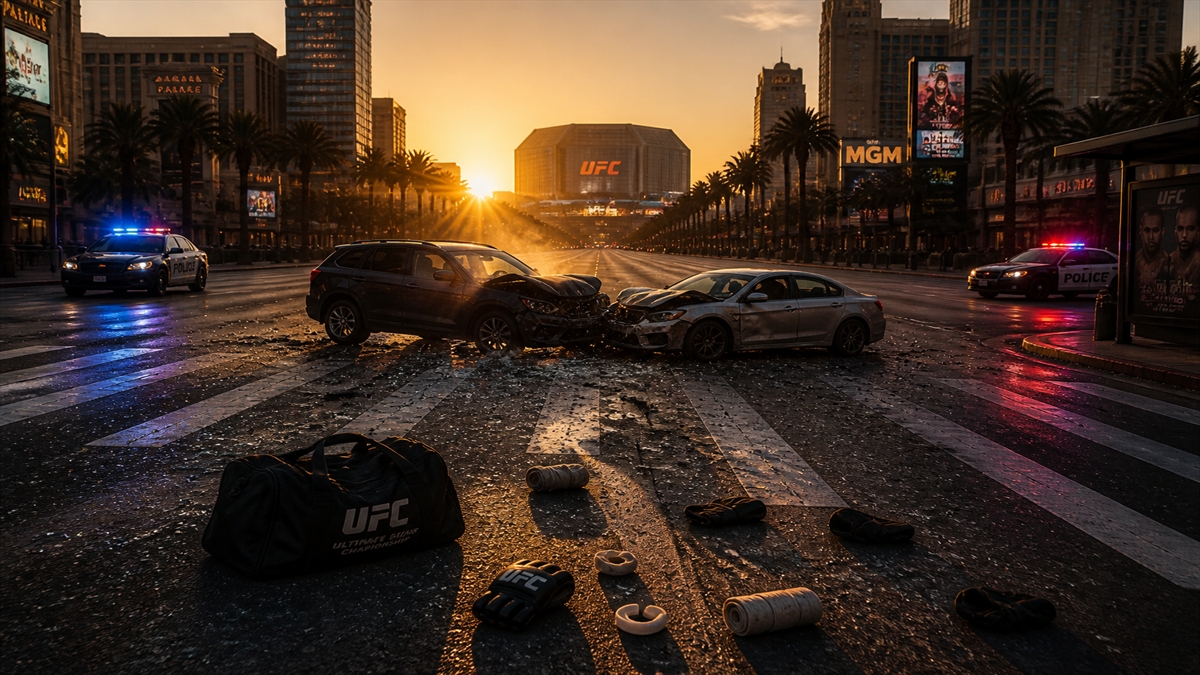
When Punahele Soriano's vehicle collided with another car in Las Vegas, the middleweight contender joined an uncomfortable statistical category that the UFC rarely discusses publicly: fighters sidelined not by training injuries or weight-cutting complications, but by the mundane chaos of everyday life. His withdrawal exposed a structural fragility in mixed martial arts that would be unthinkable in the NFL, NBA, or MLB—the absence of a systematic injury reserve protocol that protects both competitive integrity and fighter welfare.
The Accidental Vulnerability
Professional sports leagues have spent decades engineering redundancy into their operations. When an NFL linebacker tears his ACL, teams activate players from injured reserve or practice squads. When MLB pitchers undergo Tommy John surgery, organizations call up prospects from Triple-A affiliates. These systems exist because injury predictability follows statistical models: X percent of athletes will suffer Y type of trauma over Z games.
But Soriano's car accident represents the black swan event that scrambles all probability calculations. Unlike anterior cruciate ligament tears or separated shoulders—injuries with established baseline occurrence rates in combat sports—vehicular accidents, viral infections, and family emergencies defy the actuarial tables that matchmakers rely upon. The UFC operates roughly 40 events annually with approximately 500 contracted fighters, yet possesses no formalized backup infrastructure comparable to other major sports' developmental or reserve systems.
The Domino Economics of Last-Minute Withdrawals
Consider the financial cascade when a featured preliminary bout collapses 10 days before an event. The promotion has already committed to venue costs, broadcast production, marketing expenditures, and opponent preparation camps. When Soriano withdrew, his scheduled opponent faced a binary outcome: accept a replacement on drastically reduced preparation time, or forfeit months of training investment and the paycheck that funds his next camp.
This asymmetry mirrors game theory's "ultimatum game," where one party proposes a division of resources and the other can only accept or reject—except here, rejection means financial devastation. Fighters consistently accept unfavorable matchups rather than sit idle, creating a perverse incentive structure where the injured party's misfortune becomes the healthy fighter's burden.
The Hidden Show Money Gap
Unlike boxing's guaranteed purse system, UFC contracts typically structure compensation as "show money" and "win bonuses." When fights evaporate due to opponent withdrawal, the non-injured fighter loses both the show money and potential performance incentives—which the UFC is not legally obligated to pay. Some fighters report receiving partial compensation or alternative matchup offers, but no standardized policy exists in public contracts.
Major League Baseball's collective bargaining agreement guarantees injured list players their full salary. NBA contracts remain fully guaranteed regardless of injury. The UFC's system, by contrast, transfers risk almost entirely onto independent contractors who cannot control whether their opponents drive safely, avoid staph infections, or manage family crises.
The Backup Fighter Mirage
The UFC occasionally designates backup fighters for championship and high-profile bouts—insurance policies who maintain weight and readiness in case main event participants withdraw. Yet this practice appears selectively applied, typically reserved for pay-per-view headliners where backup fighters receive modest compensation for remaining in standby mode.
Why not systematize this approach across all weight classes and event tiers? The answer involves cost-benefit analysis that prioritizes promotion profitability over competitive consistency. Paying 15-20 backup fighters per event to maintain readiness would significantly increase operating expenses for insurance against relatively rare withdrawals.
What Other Sports Do Differently
The NBA maintains two-way contracts allowing teams to shuttle players between G League affiliates and parent clubs. The NFL's practice squad system keeps 16 additional players per team in immediate deployment readiness. Even boxing promoters maintain relationships with willing substitutes who can step in on short notice, though typically at lower skill levels.
The UFC could implement a tiered backup system:
- Tier One: Active roster fighters willing to accept short-notice replacement opportunities within their weight class
- Tier Two: Developmental contract fighters from Contender Series or regional promotions who receive modest retainers for maintaining fight-readiness
- Tier Three: Recently-defeated fighters in the rankings who could slot into competitive matchups on abbreviated notice
The Soriano Standard: A Case Study in System Failure
Punahele Soriano entered his scheduled bout with genuine momentum—a knockout artist whose power presented legitimate middleweight division intrigue. His absence from the card didn't just disappoint fans expecting violence; it eliminated narrative threads that matchmakers had spent months constructing.
This pattern repeats with disturbing regularity. Recent non-combat withdrawals include:
- Fighters testing positive for COVID-19 despite following protocols
- Family emergencies requiring immediate travel
- Viral infections contracted during fight week
- Vehicular accidents like Soriano's
- Non-training-related injuries (domestic accidents, recreational activities)
Each incident reveals the same vulnerability: the UFC's just-in-time matchmaking philosophy leaves zero margin for error. Unlike manufacturing supply chains that maintain buffer inventory, fight cards operate with maximum efficiency and minimum redundancy—until external shocks expose the system's brittleness.
The Competitive Integrity Question
Beyond economics lies a more fundamental issue: sporting legitimacy. When main card bouts collapse and promoters scramble to fill airtime with hastily-arranged mismatches, the product suffers. Fans purchasing tickets or pay-per-views based on advertised matchups receive inferior alternatives. Rankings become distorted when fighters accept stylistically disadvantageous replacements out of financial necessity.
The NFL's competitive balance depends partially on depth—teams that develop practice squad talent into game-ready contributors gain sustainable advantages. The UFC's current model offers no comparable development infrastructure, leaving the promotion perpetually vulnerable to the randomness that Soriano's accident represents.
Insurance Models Worth Considering
What if the UFC adopted a hybrid model that acknowledges reality's unpredictability? Options include:
- Quarterly compensation pools for backup fighters who maintain certified readiness across multiple events
- Show money guarantees paid even when opponents withdraw, funded by collective insurance pools
- Expanded development contracts with regional promoters, creating a true farm system
- Event cancellation insurance that protects fighters' financial interests when cards lose marquee bouts
The Path Forward
Punahele Soriano will heal and return to competition. His opponent found alternative work or waited for another booking. The UFC absorbed the matchmaking disruption and moved forward. But the underlying vulnerability remains unaddressed—a promotion operating without adequate insurance against probability's inevitable deviations.
The solution requires neither revolutionary restructuring nor massive financial investment. It demands only acknowledgment that modern combat sports infrastructure should match the sophistication of the NFL, NBA, and MLB systems that protect competitive integrity through redundancy and preparation.
Until then, every fighter who enters a vehicle, every athlete who navigates public spaces during pandemic seasons, every competitor who lives a full life outside the gym represents a potential catastrophic failure point in a system that refuses to build resilience into its foundation. Soriano's accident didn't create this crisis—it merely illuminated what matchmakers have known privately for years: the UFC's injury-replacement doctrine survives on luck, not design. And luck, as any serious organization understands, is not a strategy.


