The Zabit Paradox: Why MMA's Most Gifted Striker Walked Away Before His Prime
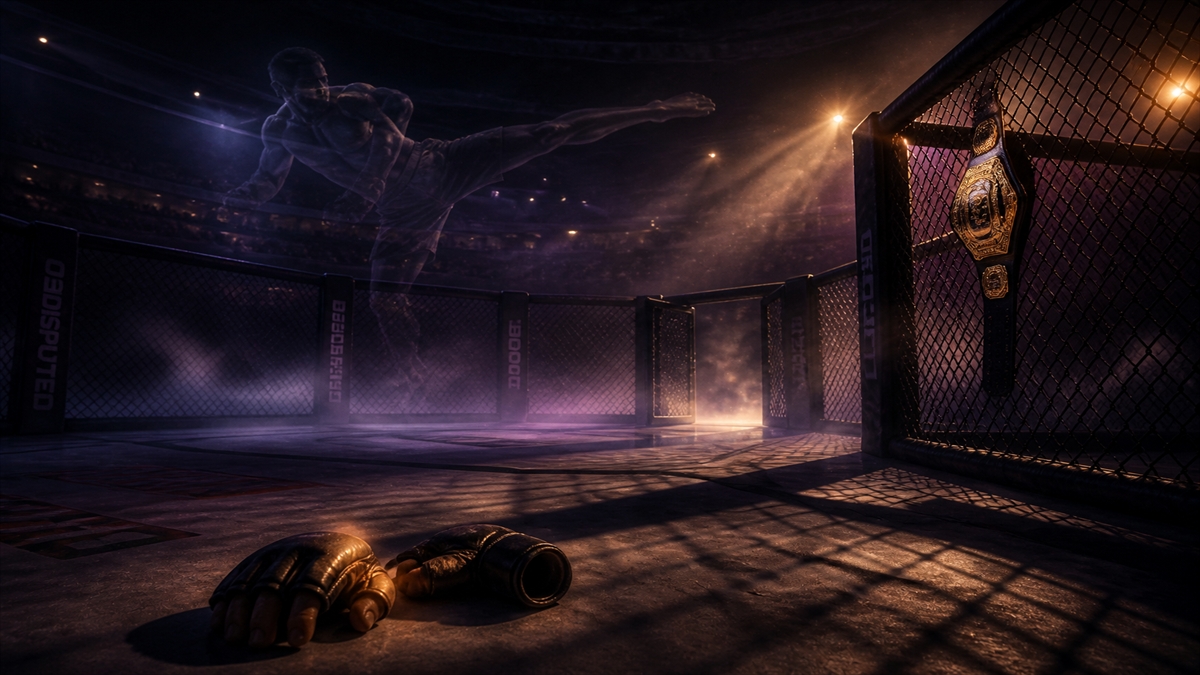
Zabit Magomedsharipov recently broke his silence to analyze Umar Nurmagomedov's knockout victory, and the irony was impossible to ignore. Here was one of the most technically brilliant featherweights ever to grace the octagon, now reduced to commentator status at age 30, dissecting the success of fighters still chasing the glory he abandoned. It wasn't supposed to end this way. Zabit was supposed to be champion. Instead, he became MMA's most haunting what-if story, a cautionary tale about the hidden cost of being too damn good.
The Artist Who Couldn't Finish His Masterpiece
Watch any Zabit fight from his UFC run and you'll see something rare in modern MMA: a striker who moved like he was composing music rather than inflicting violence. His spinning attacks weren't desperation moves, they were punctuation marks. His feints created openings that most fighters couldn't even perceive. He went 14-1 in his professional career, with his only loss coming in his second pro fight back in 2013. By the time he faced Calvin Kattar in 2019, delivering a virtuoso performance over three rounds, he looked destined for a title shot.
Then the cracks started showing. Not in his technique, which remained flawless, but in his gas tank. Zabit's fights became a race against his own cardiovascular system. The third round became his enemy. He could dominate opponents for ten minutes, but that final five minutes exposed a vulnerability that all his Dagestani drilling couldn't solve. Some blamed his extreme height for featherweight (6'1" fighting at 145 pounds), others pointed to his spinning techniques burning through energy like a Formula One car. But the real issue ran deeper than physiology.
The Perfectionist's Prison
Here's what nobody talks about: Zabit didn't just want to win, he wanted to win beautifully. Every technique had to be crisp. Every combination had to flow. This wasn't ego, it was something more insidious. Perfectionism in combat sports creates a psychological trap where anything less than technical mastery feels like failure, even when you're winning fights. And when your body won't cooperate with your mind's demands, that trap becomes a cage.
The Dagestani fighting culture, for all its proven excellence, carries tremendous weight. You're not just representing yourself, you're carrying forward a lineage. Khabib Nurmagomedov retired undefeated. Islam Makhachev dominates with methodical precision. When you're part of that ecosystem and you can't go five hard rounds without fading, the expectations become crushing. It's like being a concert pianist who can nail the first movement but fumbles the finale, every single time, in front of an audience that expects perfection.
The Stamina Science Nobody Wanted to Address
Featherweight has always been MMA's cruelest division for tall fighters. Cutting from probably 170 pounds to 145 doesn't just drain your body of water, it compromises your mitochondrial function. Your cells literally can't produce ATP efficiently when you're that depleted. Add Zabit's explosive style, which relies on fast-twitch muscle fibers that fatigue quickly, and you've got a metabolic nightmare disguised as martial arts brilliance.
Moving to lightweight seemed like the obvious solution. Extra ten pounds, less severe cut, more sustainable energy systems. But here's where the paradox deepens: at lightweight, Zabit would lose his physical advantages. His reach, his ability to stay on the outside, his leverage on spinning attacks, all of it becomes less pronounced against naturally bigger men. He'd be good, maybe even great, but not special. And for someone whose entire identity was built on being extraordinary, being merely great might have felt worse than walking away entirely.
The Fighters Who Chose Imperfection and Longevity
Contrast Zabit's path with fighters who embraced their flaws and built long careers anyway. Donald Cerrone knew he was hittable. Took stupid fights on short notice. Lost more than he should have. Still competed for over a decade because he accepted that perfection wasn't the point. Jim Miller is 40 years old and still winning UFC fights despite never being the most skilled guy in any area. His secret? He never demanded flawlessness from himself.
Or look at someone like Max Holloway, who gets hit more than elite strikers should but compensates with volume and pace. He's been knocked out, submitted, and outclassed at times. Yet he keeps coming back because his relationship with fighting isn't conditional on technical perfection. The game is the reward, not just winning the game perfectly.
This psychological flexibility might be more important than any physical skill. In poker, they call it being comfortable with variance, accepting that even optimal plays sometimes result in losses. Combat sports demand the same mental framework. You're going to look bad sometimes. Your technique will fail. Your cardio will betray you in front of millions. The question is whether you can tolerate that imperfection and keep showing up anyway.
What Modern Betting Markets Reveal About Perfectionism
There's an interesting parallel in how modern fight analysis has evolved. Sophisticated bettors now build models that account for fighter psychology, not just physical skills. They've learned that fighters with perfect technique often become paradoxically beatable because their mental rigidity creates predictable patterns. Meanwhile, fighters who adapt messily but effectively become harder to price accurately. When assessing prop bets for championship fights, the X-factor increasingly isn't who's more skilled but who's more comfortable operating outside their ideal game plan when chaos erupts.
Zabit's fights became easier to bet against as his career progressed, not because his skills diminished but because everyone knew the script: masterful first two rounds, then the question of whether his opponent could survive long enough to exploit the fade. That predictability, born from his inability to deviate from technical excellence, made him vulnerable in ways that less polished fighters never experience.
The Dagestani Expectations Machine
Training in Dagestan isn't just about learning techniques, it's about inheriting a standard. When Zabit's teammate Khabib talks about legacy, he means something specific: dominance so complete that your victories seem inevitable. Anything less feels like underachievement. This mindset produces champions, but it also creates casualties among those who can't meet its impossible bar.
Umar Nurmagomedov, whose recent knockout Zabit analyzed, represents a newer generation that seems more comfortable with controlled risk-taking. He throws looping punches sometimes. His technique isn't always textbook. But he's still winning, and perhaps more importantly, he's still fighting. The lesson might be that the Dagestani system works best when fighters take its technical foundation but don't let its perfectionism paralyze them.
The Final Round That Never Happened
Zabit's last fight was in 2019 against Calvin Kattar, a beautiful decision victory that somehow felt like a loss because of how visibly he faded. He was scheduled to face Yair Rodriguez in 2020, then the pandemic hit, then health issues, then silence. By the time he officially announced his retirement in 2022, most people had already moved on. No farewell fight, no championship opportunity, just a gradual disappearance.
What makes it tragic isn't that he walked away, it's that he walked away from something he was genuinely exceptional at because he couldn't accept being exceptional with asterisks. In a sport that regularly celebrates flawed warriors who leave everything in the cage, Zabit chose absence over imperfection. That decision reveals something profound about how we construct identity around achievement. When being very good feels indistinguishable from failure, the only winning move is not to play.
What We Lost When Zabit Stopped Fighting
MMA is poorer without Zabit Magomedsharipov, not because he would have become champion (though he might have), but because his style represented something increasingly rare: creativity within technical mastery. The sport trends toward systematic approaches, guys who do a few things really well rather than attempting the full martial arts spectrum. Zabit was the last of a dying breed, a fighter who could go from sambo trips to flying knees to slick boxing all in the same sequence.
His retirement at 30, right when most fighters enter their actual prime, serves as a warning sign about how we evaluate success in combat sports. We celebrate killers and grinders, guys who win ugly and don't care how it looks. But we also need artists, and we need to create space for those artists to be human, to have bad rounds and come back, to lose fights and rebuild. Zabit never gave himself that grace, and now we're left analyzing his commentary instead of his continued evolution.
The saddest part? Somewhere in Dagestan, there's probably another teenage phenom learning spinning attacks and slick feints, being told that anything less than perfection is unacceptable. And the cycle continues, producing incredible talents who may never reach their full potential because the weight of expectation becomes heavier than any opponent they'll face. Zabit's legacy isn't his highlight reel, it's the question he left unanswered: what happens when being great isn't good enough?


