Islam Makhachev's Shoulder Pop Heard Round the World: Why MMA Camps Still Play Doctor
The Viral Moment That Made Sports Medicine Professionals Wince
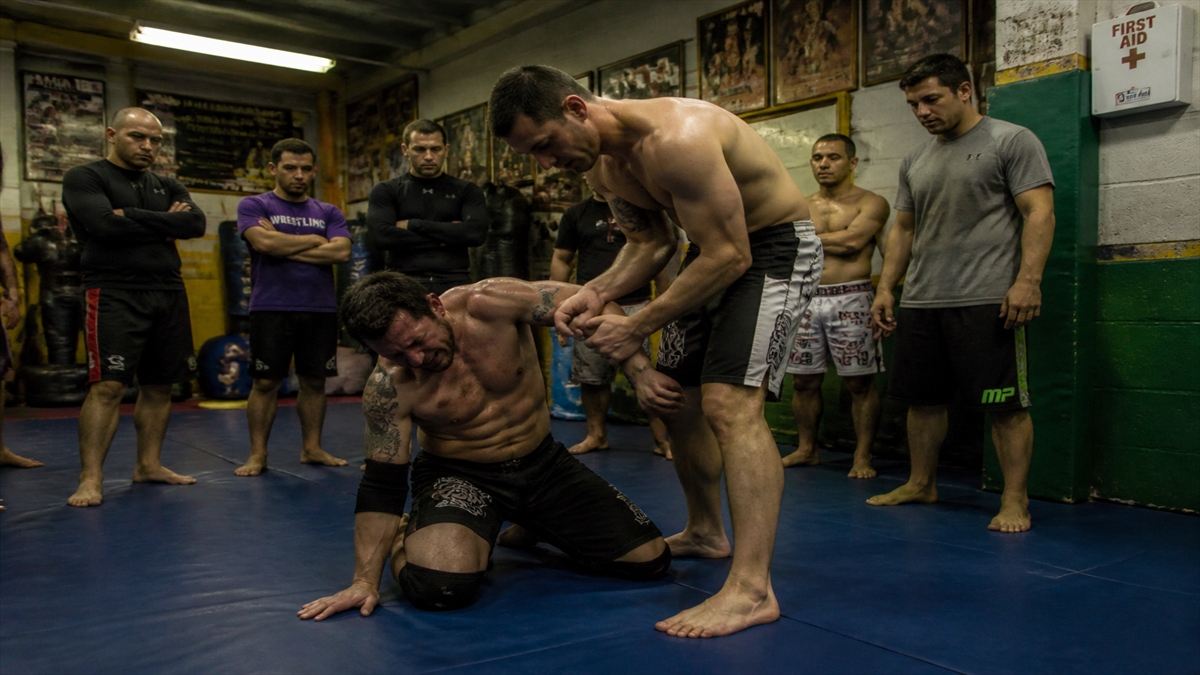
When footage surfaced of UFC lightweight champion Islam Makhachev attempting to relocate a teammate's dislocated shoulder mid-sparring session, the MMA internet did what it does best: split into warring factions. One camp praised the Dagestani champion's hands-on leadership and old-school toughness. The other—populated heavily by athletic trainers, physical therapists, and orthopedic specialists—collectively groaned at yet another example of unqualified practitioners performing medical procedures that require years of study to execute safely.
The incident itself looked innocuous enough to casual observers. A training partner's shoulder pops out during grappling. Makhachev, likely having seen this injury countless times in wrestling rooms across Dagestan, positions himself to manipulate the joint back into place. The camera captures grimaces, some shuffling, and eventually the kind of resolution that makes bystanders exhale in relief. Just another day at American Kickboxing Academy, right?
Except medical professionals saw something entirely different: a potential lawsuit, a contraindication nightmare, and a textbook example of why credentialism exists in the first place. The backlash was swift and technical, citing everything from neurovascular bundle damage risks to the possibility of fracture displacement. But beneath the anatomical jargon lay a more fundamental question that MMA has been dodging since its mainstream emergence: Why do elite combat sports camps still operate like frontier medicine shows when billion-dollar organizations could easily mandate credentialed medical staff?
The Historical Baggage: From Boxing Corners to Wrestling Rooms
To understand why Makhachev's shoulder manipulation didn't raise eyebrows inside AKA, you need to trace the cultural DNA of combat sports training environments. Boxing's cutman tradition essentially invented the concept of ringside medical improvisation—using Vaseline, Enswell tools, and adrenaline-soaked cotton swabs to patch fighters between rounds. These weren't licensed physicians; they were craftsmen who learned through apprenticeship and repetition.
Wrestling culture took this ethos even further into the realm of deliberate suffering. The sport's Soviet and Eastern European lineages especially emphasized training through injury, viewing pain tolerance as a skill to be developed rather than a warning signal to be heeded. Coaches in these systems routinely manipulated joints, prescribed ice-bath protocols, and made return-to-competition decisions that would horrify modern concussion specialists.
MMA inherited both traditions wholesale, then added its own layer of regulatory confusion. Unlike boxing, which at least has semi-consistent athletic commission oversight, MMA gyms operate in a largely unregulated space. There's no federal standard for what medical credentials a head coach must possess, no mandatory continuing education in sports medicine, and certainly no requirement that someone on staff can differentiate between a Grade II AC separation and a posterior glenohumeral dislocation.
The Economic Reality Nobody Wants to Discuss
Here's where the conversation gets uncomfortable for both sides. Hiring a full-time athletic trainer with proper credentials—we're talking a licensed PT or certified athletic trainer, not just someone who took a weekend course in kinesiology—costs real money. For top-tier camps like AKA, Jackson-Wink, or American Top Team, this expense is manageable. For the hundreds of regional MMA gyms grinding out prelim fighters and regional circuit competitors, it's a budget line item that competes directly with facility rent and liability insurance.
The UFC's Performance Institute in Las Vegas offers a glimpse of what credentialed MMA medicine could look like at scale: full-time physicians, biomechanics labs, nutrition scientists, and sports psychologists all working in concert. But access is limited to contracted fighters, and even then, champions like Makhachev spend most of their camp cycles at home gyms where such resources don't exist.
This creates a perverse incentive structure. Fighters know they should seek proper medical assessment for injuries, but doing so might reveal damage that forces them to pull out of a fight—costing them purse money, ranking position, and momentum in a sport where staying active is everything. The unspoken agreement becomes: Let's handle this in-house, avoid the official diagnosis, and keep the money train moving.
What Actually Goes Wrong: A Medical Case Study
Let's be specific about the risks Makhachev's shoulder manipulation posed, because vague hand-wringing about "danger" doesn't capture the actual medical stakes. When a shoulder dislocates, several things might happen beyond the obvious ball-and-socket separation:
- The axillary nerve can stretch or tear, leading to deltoid paralysis
- Brachial plexus damage can cause permanent arm weakness or numbness
- Small bone fragments can chip off, turning a simple dislocation into a surgical emergency
- Rotator cuff tears can worsen if the humerus is reduced incorrectly
- Recurring instability patterns can develop if the initial relocation doesn't properly seat the humeral head
A credentialed professional assesses for these complications before attempting reduction. They check distal pulses, test sensation in the C5-T1 dermatomes, palpate for crepitus suggesting fracture, and often order imaging before any manipulation. The fighter playing doctor checks if his buddy's arm still moves, then yanks.
The gambling analogy here is instructive: You wouldn't let your training partner manage your fight purse investments without financial credentials, yet we routinely trust them with procedures that could end careers. The risk-reward calculation only makes sense in a culture that systematically undervalues credentialed expertise.
The Hybrid Sport's Identity Crisis
MMA's medical credentialism problem stems partly from its Frankenstein origins. The sport cobbled together striking from Muay Thai and boxing, grappling from wrestling and BJJ, conditioning protocols from multiple traditions, and training philosophies from coaches who often contradict each other. This eclecticism is MMA's greatest strength aesthetically but creates chaos when establishing professional standards.
Boxing has the cutman. Wrestling has the room boss who runs practice like a gulag commandant. BJJ has the professor who might also sell you açaí bowls and CBD recovery supplements of dubious provenance. MMA camps combine all these authority figures into a single chaotic ecosystem where the hierarchy of medical decision-making is anyone's guess.
Who makes the call when a fighter shows concussion symptoms? The head coach protecting his win record? The fighter desperate to make rent? The manager whose commission depends on the bout happening? Or the team physician who might not even be present at the facility? The Makhachev incident illustrates how these questions often get answered by proximity and confidence rather than competence and credentials.
What Actual Reform Would Require
Fixing this mess would demand uncomfortable concessions from multiple stakeholders. Athletic commissions would need to extend oversight beyond fight night to include camp medical protocols. The UFC and other major promotions would need to mandate minimum medical staffing standards for gyms housing contracted fighters. Insurance companies would need to create products that make credentialed medical professionals affordable for regional gyms. And fighters would need to accept that sometimes proper medical assessment means pulling out of fights.
None of these changes are happening soon, because each threatens the informal arrangements that keep MMA's economy functioning. The sport runs on a combination of calculated risk-taking and strategic ignorance that credentialism would disrupt. When your entire training camp costs less than one session with a sports medicine specialist at a major hospital, you learn to trust the guy who's been wrestling since he was six years old, medical degree or not.
The Uncomfortable Middle Ground
Here's what makes the Makhachev situation genuinely complicated rather than just reckless: He probably has relocated dozens of shoulders successfully. His teammate likely trusted him more than a random ER physician unfamiliar with combat sports. The injury might have resolved fine, with no lasting complications. And the alternative—shutting down training to seek formal medical care—might have derailed preparation for a fight that represents someone's entire year of income.
This is the gray zone where combat sports have always existed, and it's precisely why medical professionals find the sport so frustrating. Yes, unqualified intervention carries risk. But so does the alternative pathway through a healthcare system that doesn't understand fight camp timelines, that might over-diagnose to protect against liability, and that costs more than many fighters earn in a year.
The solution isn't romanticizing old-school toughness or pretending credentials don't matter. It's building credentialed medical infrastructure that actually serves fighters' economic reality rather than existing in a parallel universe of best practices that only elite athletes can afford. Until MMA solves that structural problem, we'll keep seeing viral videos of champions playing doctor and medical professionals shaking their heads from the sidelines.
The sport has matured in almost every other dimension—drug testing, weight-cutting oversight, concussion protocols. Medical credentialism is the last frontier, and incidents like Makhachev's shoulder manipulation suggest we're still years away from crossing it. The question is how many careers need to be shortened by preventable complications before the economic incentives finally shift toward hiring people who actually know what they're doing.


