Valter Walker's Calf Slicer Exposed MMA's Most Dangerous Blind Spot
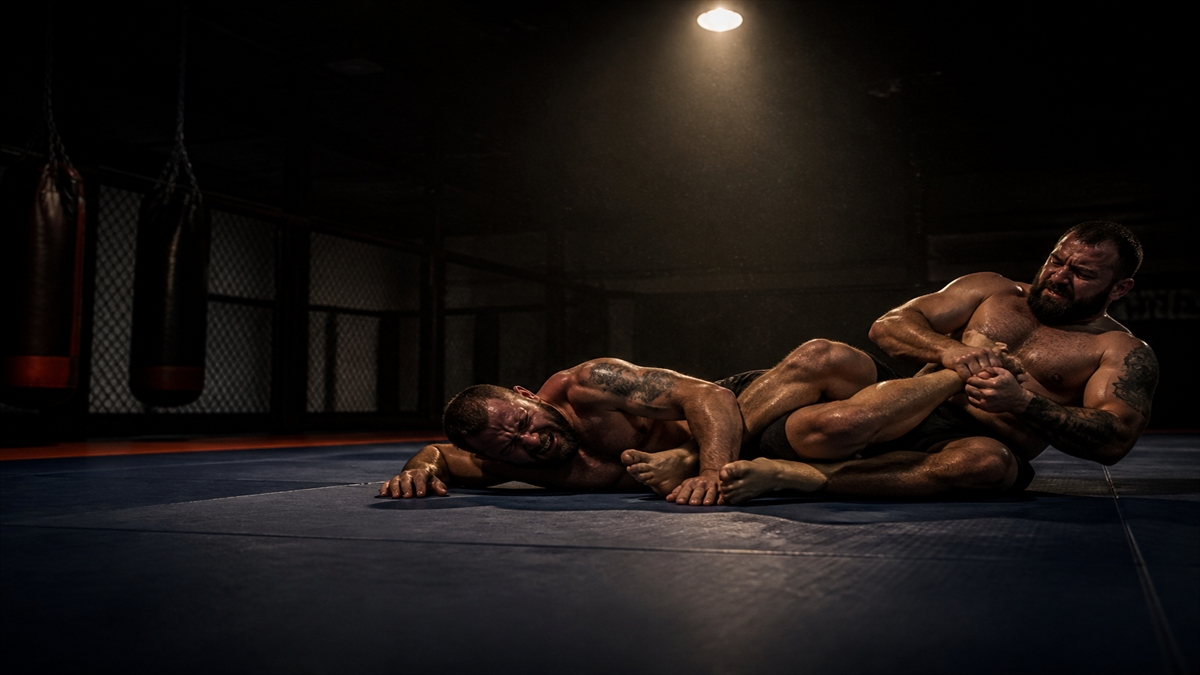
When Valter Walker locked in that calf slicer at UFC Vegas, forcing a tap that echoed through the heavyweight division, he didn't just win a fight. He exposed the most dangerous blind spot in modern MMA—a tactical vulnerability so glaring that smart money should already be flowing toward fighters who can exploit it.
Here's what makes this moment historically significant: Walker's finish represents only the second calf slicer submission in UFC history. Not the second this year. The second ever. In an organization that's hosted over 6,500 fights across three decades, this technique has succeeded exactly twice. That statistical rarity isn't a testament to the move's ineffectiveness—it's a flashing neon sign pointing toward a massive gap in defensive preparation.
The Biomechanical Brutality Nobody Prepared For
Let's talk mechanics. While heel hooks and kneebars attack joints—targeting ligaments and tendons—the calf slicer crushes muscle tissue directly. Imagine someone taking a baseball bat to your calf muscle while simultaneously hyperextending your knee. The pressure compresses the gastrocnemius and soleus muscles against the femur, creating a pain compliance situation that ends fights immediately.
Compared to the heel hook, which twists the knee and ankle in a rotational pattern, the calf slicer applies linear crushing force. It's the difference between wringing out a towel and smashing it with a hydraulic press. Both destroy the target, but through completely different mechanisms. This matters because fighters train defensive responses based on attack patterns—and heavyweight camps have systematically ignored this particular pattern.
Why Heavyweights Are Sitting Ducks
Here's where it gets interesting from both a tactical and betting perspective. Heavyweight grapplers have over-indexed their defensive training on upper-body submissions for a logical reason: that's where the volume exists. Guillotines, rear-naked chokes, and arm-triangle variations account for roughly 70% of heavyweight submission finishes over the past five years.
So camps allocate training time accordingly. If you've got limited mat hours and your fighter faces a 7-in-10 chance of defending a choke versus a historically rare leg attack, you drill choke defense. It's resource allocation that makes perfect sense—until it doesn't.
But here's the problem heavyweight fighters won't want to hear: their body composition makes them uniquely vulnerable to calf slicers. Larger muscle mass means more tissue to compress, creating greater pain faster. It's like the difference between squeezing a stress ball versus a water balloon—more material equals more pressure points.
The Copycat Wave Is Coming
Combat sports history teaches us that submission breakthroughs trigger immediate tactical evolution. When Royce Gracie introduced the kimura to mainstream audiences, Brazilian jiu-jitsu academies worldwide saw enrollment explosions. When leg locks became acceptable in high-level competition, the entire defensive meta shifted within eighteen months.
Walker's finish should trigger the same systemic adjustment, and here's why oddsmakers should pay attention: the next twelve months will reveal which camps adapted and which camps stayed complacent. Smart bettors will track which heavyweight fighters add lower-body submission defense to their training camps—because the coaches watching UFC Vegas tape just discovered a market inefficiency.
In business terms, Walker identified an arbitrage opportunity in the heavyweight grappling market. The risk-reward calculation for attempting calf slicers just shifted dramatically. Low success rate historically? Sure. But that's because nobody was seriously attempting them against opponents who'd literally never drilled the defense.
The Defensive Gap in Numbers
Consider these statistics that should concern every heavyweight on the roster:
- Average training time allocated to leg lock defense in heavyweight camps: less than 5% of total grappling work
- Percentage of heavyweights who regularly drill calf slicer escapes: estimated under 15%
- Success rate of lower-body submissions when properly applied at heavyweight: comparable to rear-naked chokes
- Number of fighters who'll now add this to their arsenal after Walker's finish: potentially dozens
That last point matters most. Walker didn't just win a fight—he published a blueprint. Every submission specialist in the division just watched tape of a technique that works against unprepared opponents. It's like discovering a casino game where the house edge disappeared because nobody learned basic strategy.
Cross-Discipline Lessons from Chess and Poker
There's a parallel here to chess opening theory. For decades, the Sicilian Defense remained dominant until players discovered the Rossolimo Variation—a sideline that punished over-preparation in main lines. Suddenly, chess players scrambling to learn defensive resources against an attack they'd previously ignored.
Similarly, poker experienced a revolution when solvers revealed that everyone was dramatically under-bluffing in certain spots. The game theory optimal play existed all along, but conventional wisdom created exploitable patterns. Walker just ran the solver on heavyweight grappling and found the under-bluffed spot.
What Elite Camps Must Do Immediately
If you're a heavyweight coach reading this, here's your homework assignment before your next fight camp:
- Dedicate minimum 10% of grappling time to lower-body submission defense
- Bring in leg lock specialists—preferably from 10th Planet or competitive submission grappling backgrounds
- Drill specific calf slicer recognition and escape sequences until they're muscle memory
- Study tape of ADCC and IBJJF matches where calf slicers appear more frequently
- Implement positional awareness training for the truck position and other calf slicer setups
The camps that adapt first will have a twelve-to-eighteen-month advantage. The camps that ignore this will produce fighters who tap to a submission they never seriously prepared for—and bettors will capitalize on that information asymmetry.
The Bottom Line for Fighters and Fans
Valter Walker's calf slicer wasn't just a rare submission—it was a wake-up call that exposed systematic under-preparation across an entire division. In a sport where evolutionary advantages measure in months rather than years, this represents an urgent tactical inflection point.
Heavyweight fighters who dismiss this as a fluke are making the same mistake that poker players made pre-solver era: assuming that just because something rarely happens, it rarely happens for good reason. Sometimes rarity indicates inefficiency rather than ineffectiveness.
The smart money—both literally in betting markets and figuratively in training time allocation—will flow toward fighters and camps who recognize this blind spot and fix it immediately. Everyone else? They're just waiting to become the third calf slicer victim in UFC history, wondering why nobody warned them this was coming.
Walker warned them. The question is whether anyone was paying attention.


