Why Tie Bets in Baccarat Are Risky
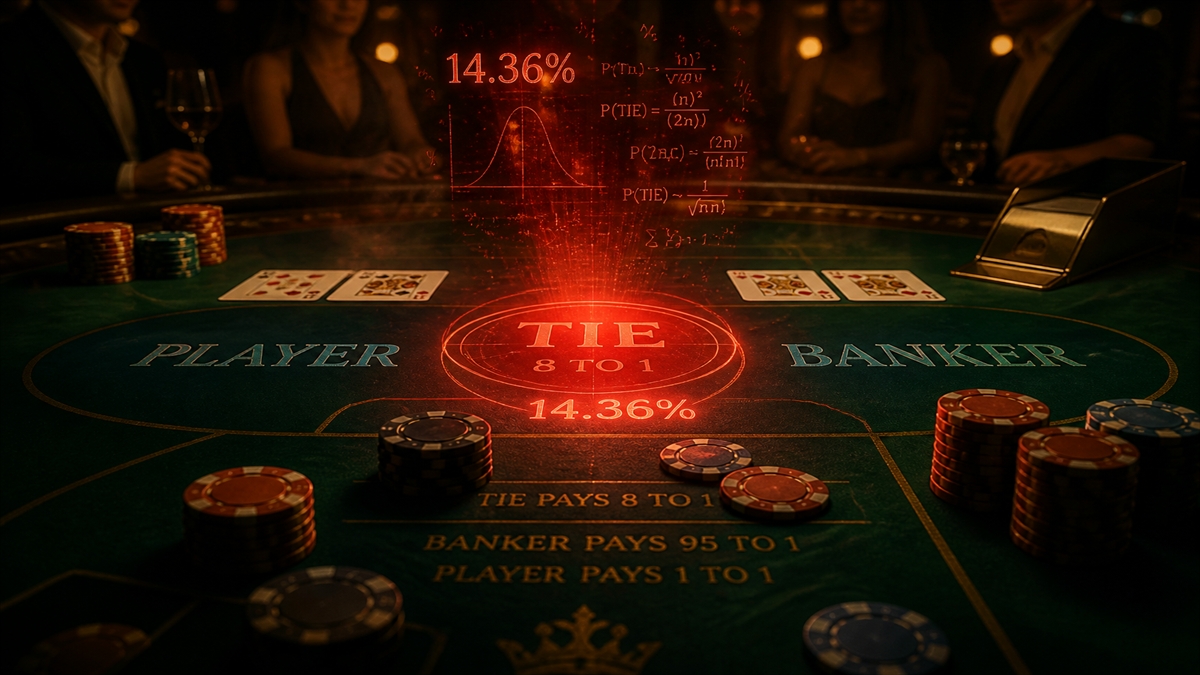
Baccarat attracts millions of players worldwide with its elegant simplicity and relatively favorable odds. Three betting options sit before every player at the table: Banker, Player, and Tie. While the first two offer some of the lowest house edges in any casino game, the tie bet tells an entirely different story. It tempts players with an alluring 8:1 or 9:1 payout, but the mathematics behind it reveal a wager that consistently erodes bankrolls over time. Understanding exactly why this bet carries so much risk is essential for anyone who takes their baccarat sessions seriously.
The Mathematics Behind the Tie Wager
Every casino game operates on a mathematical framework that determines how much the house earns over time, and baccarat is no exception. The Banker bet carries a house edge of approximately 1.06%, while the Player bet sits at roughly 1.24%. These numbers make baccarat one of the most player-friendly table games available. The tie bet, however, introduces a dramatically different equation that shifts the advantage heavily toward the casino.
How the House Edge Stacks Up
When you place a tie bet, the house edge jumps to approximately 14.36% with an 8:1 payout. Some tables offer 9:1, which reduces the edge to around 4.85%, but this variant remains far less common. To put this into perspective, the tie bet at 8:1 gives the casino roughly thirteen times the advantage it holds on a Banker wager. For every $100 wagered on ties over an extended session, a player can expect to lose about $14.36 on average, compared to just $1.06 on Banker bets.
| Bet Type | House Edge | Payout | Expected Loss per $100 |
|---|---|---|---|
| Banker | 1.06% | 0.95:1 | $1.06 |
| Player | 1.24% | 1:1 | $1.24 |
| Tie (8:1) | 14.36% | 8:1 | $14.36 |
| Tie (9:1) | 4.85% | 9:1 | $4.85 |
Why the Payout Looks Deceiving
The 8:1 payout creates a psychological trap that hooks players into believing they are chasing a profitable opportunity. Winning eight units on a single bet feels rewarding, and when it happens, the dopamine rush reinforces the desire to bet on ties again. However, the frequency of ties occurring does not align with what the payout suggests. A fair payout for a tie would be closer to 10:1, reflecting the true probability of roughly 9.52% per hand. The casino shaves off significant value by paying only 8:1, and that gap represents the profit margin that keeps the house comfortable.
Players often recall the times they hit a tie and forget the many consecutive hands where the wager lost. This selective memory, known as confirmation bias, distorts the perceived value of the bet. Over hundreds of hands, the tie bet drains funds at a pace that neither the Banker nor Player wager can match.
Real Bankroll Impact Over Extended Play
Consider a session where a player wagers $25 per hand across 200 hands. On Banker bets, the expected loss totals roughly $53. Switching entirely to tie bets at the same stake pushes the expected loss to approximately $718. That difference is staggering and illustrates why experienced baccarat players treat the tie option as a side attraction rather than a core strategy.
Whether you play at a physical casino or explore platforms like Ice casino, disciplined bankroll management demands awareness of which bets protect your funds and which ones accelerate losses. Sticking to Banker and Player wagers keeps variance manageable and extends playing time significantly.
Smarter Alternatives for Baccarat Players
Rather than chasing the tie payout, players benefit from adopting strategies that leverage the low house edge on standard bets. Several approaches help maintain discipline and improve the overall experience:
- Focus on Banker bets as your primary wager since they statistically win slightly more often than Player bets
- Set clear session limits for both wins and losses before sitting down at any table
- Avoid progressive systems that escalate stakes after losses, as they amplify risk without changing the underlying odds
- Track your results over multiple sessions to recognize patterns in your own betting behavior
- Treat baccarat as entertainment rather than an income source, which keeps expectations realistic
Protect Your Bankroll at the Baccarat Table
The tie bet in baccarat survives because of its visual appeal and emotional payoff when it hits. Strip away that excitement, and what remains is a wager with a punishing house edge that erodes bankrolls faster than nearly any other bet on the casino floor. Choosing Banker or Player bets consistently gives you the best mathematical footing. Next time you sit down for a baccarat session, resist the allure of that 8:1 payout and let the numbers guide your decisions instead.


