Majority draws in MMA and the refund rule they trigger
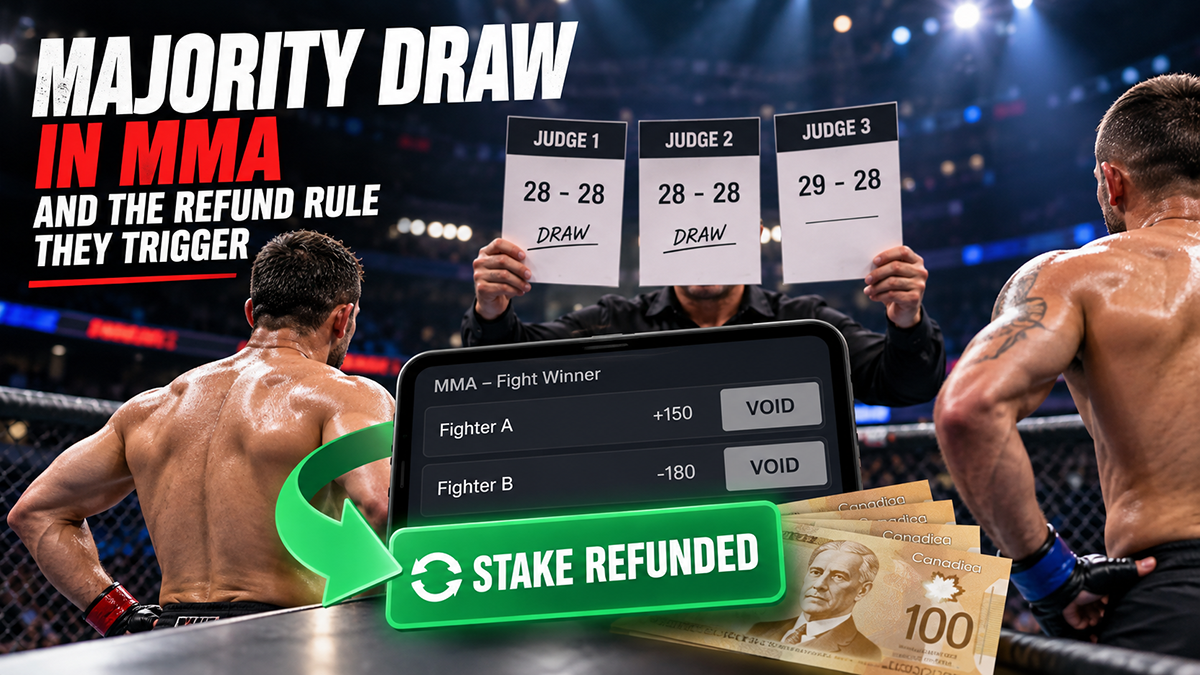
Two judges score an MMA championship fight evenly. The third awards it to one fighter. Despite that favourable scorecard, neither competitor wins. The official result is a majority draw, a verdict that carries consequences for sportsbooks as well as championship records. On certain fight-winner markets, both sides receive their stakes back. Elsewhere, the same result can produce losing selections, winning draw wagers or settlements based on entirely different measurements.
The Unified Rules of Mixed Martial Arts define a majority draw through the judges' individual verdicts. Two tied cards, such as 28–28 and 28–28, outweigh a third card of 29–28 favouring one competitor.
A majority decision reverses that arrangement: two judges select the same winner, while the third scores the fight evenly. The difference is decisive because only one outcome records an official victory.
Canadian gambling platforms offering several products under one account must accommodate these sporting distinctions. ToonieBet, an online casino canada platform intended for customers outside Ontario, lists more than 5,000 casino games and a sportsbook covering MMA competitions including UFC. Its range of markets provides context for a fundamental separation: official sporting results and contractual betting outcomes are governed by different rules.
MMA's 10-point must system can produce tied cards through uneven round scores. Two 10–9 rounds can be offset by a 10–8 round in the opposite direction. Referee-imposed point deductions can also erase a fighter's scoring advantage.
Crucially, judges' verdicts are not determined by adding all three scorecards together. Two tied cards establish a majority draw even when their combined numerical totals favour one competitor.
Why two-way MMA moneylines usually return the stake
A standard two-way moneyline offers two selections, each requiring a particular fighter to win. An official draw satisfies neither condition.
Under published settlement provisions used by sportsbooks, a drawn contest commonly produces a push or void when the original winner market contains no draw selection. The original cash stake is returned, without the profit associated with a successful wager.
Consider a $100 selection at +150. A victory would generate $150 in profit, whereas a majority draw covered by a push provision returns the original $100.
Three-way markets establish a different contractual arrangement. When Draw is included alongside both fighters as a selectable outcome, the draw selection wins and wagers on either competitor lose.
The presence of a separate draw proposition elsewhere on the platform does not automatically alter an existing two-way market. Settlement depends on the selections available within the accepted wager and any applicable market-specific provisions.
Why other MMA markets produce different settlements
A majority draw leaves several measurable aspects of a completed fight unchanged. Its duration, individual round scores and whether the contest reached its scheduled conclusion remain matters of record.
A fighter-specific method-of-victory wager requiring a decision victory ordinarily loses because no competitor has been declared the winner. A fight-to-go-the-distance selection can still succeed when all scheduled rounds finish normally.
Round-total wagers concern duration rather than the judges' verdict. Points handicaps may instead use aggregate scorecard figures, potentially producing a handicap winner despite the official draw.
Parlay settlement adds another contractual layer. A pushed selection in a conventional parlay generally leaves the remaining legs active. Some pre-match MMA same-game parlays void the entire ticket when one component pushes. Certain live same-game products instead recalculate the wager using the remaining selections.
These outcomes reflect differences in market definitions, not inconsistencies in the fight's official classification.
Figueiredo versus Moreno: the deduction behind UFC 256's draw
The December 12, 2020, flyweight championship bout between Deiveson Figueiredo and Brandon Moreno offers a documented example of a scoring decision affecting the result.
After five rounds, one judge awarded Figueiredo a 48–46 victory. The remaining judges submitted identical 47–47 cards, producing a majority draw.
A third-round low blow cost Figueiredo one point. Without that deduction, both tied scorecards would have favoured the champion. Instead, he retained the title without receiving an official victory.
Applied hypothetically under standard two-way moneyline draw provisions, wagers on either fighter would have returned their original stakes. A three-way winner market would have produced losing fighter selections and a winning draw selection.
Those illustrations describe settlement principles, not verified outcomes for individual betting tickets from UFC 256.
The title's retention presents another distinction. A championship-holder market may be defined differently from a fight-winner market, making its precise terms essential to settlement.
Technical draws, no contests and official-result corrections
A majority draw follows the judges' completed scoring process. Technical draws and no contests are separate classifications commonly associated with particular fouls, injuries or stoppages.
Sportsbooks may void full-fight markets following those outcomes while preserving wagers already conclusively determined. Their rules also specify whether subsequent corrections to official results justify changing completed settlements.
Canadian gambling regulation varies by jurisdiction. ToonieBet operates under Tobique Gaming Commission licence No. 0000050 for its offering outside Ontario.
Gambling is restricted to adults meeting applicable local age requirements. A refunded stake represents returned funds, not a profit, and gambling-related financial harm remains possible. Confidential assistance is available through provincial and territorial gambling support services.


